
Reviewed · INCA RUINS & ARCHAEOLOGICAL SITES
City tour : Qoricancha, sacsayhuaman, qenqo, tambomachay
Five stops, one compact Cusco circuit. This half-day outing links Sacsayhuaman, Q’enqo, Puka Pukara, Tambomachay, and Qorikancha, giving you a useful first look at Inca military, ritual, water, and religious sites. I like the low $15 price and the fact that transport and a professional guide are included. I also like the small maximum of 18 people, which should make the five-hour route easier to manage.
The main catch is that entrance fees are extra. You need 70 soles for the partial ticket covering four archaeological centers, plus 15 soles for Qorikancha, so the final cost is higher than the headline price. Guide Ivan receives especially warm praise for being attentive, professional, and well informed, a useful detail if you value clear explanations over simply being driven from site to site.
In This Review
- Key points to know before booking
- Why this five-stop route works in Cusco
- Sacsayhuaman and the scale of Inca defense
- Q’enqo, a ritual site carved into limestone
- Puka Pukara and the road into Cusco
- Tambomachay, the Inca relationship with water
- Qorikancha reveals the collision of two traditions
- What the $15 price really gives you
- The guide can shape the whole experience
- Timing, meeting point, and practical planning
- Who will get the most from this tour
- Should you book this Cusco city tour?
- FAQ
- How long does the tour last?
- What places does the tour visit?
- Are entrance fees included?
- Is transportation included?
- Is the tour offered in English?
- How large is the group?
Key points to know before booking
- Five major Cusco sights in about five and a half hours: You cover four sites outside the city center, then finish at Qorikancha.
- Sacsayhuaman provides the visual high point: The enormous granite blocks make Inca stonework easy to appreciate at once.
- The 85 soles in entrance fees matter: They are not part of the $15 booking price, so budget for them separately.
- English service is available: The tour is offered in English and includes a professional guide.
- A maximum of 18 people keeps the group moderate: It is not a private tour, but it is smaller than a large coach outing.
- Guide Ivan earns specific praise: His attentive manner and professional approach may add real value at sites where the stones need interpretation.
Why this five-stop route works in Cusco
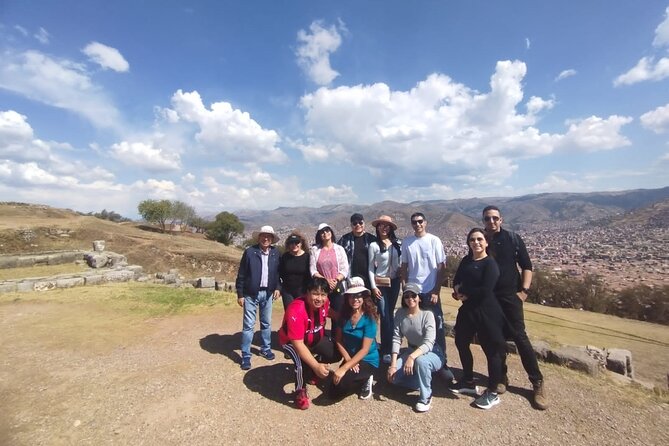
Cusco rewards a little planning. Its Inca remains are spread between the historic center and the hills above it, and visiting each place independently can mean arranging transport, checking entrance requirements, and keeping track of a tight sequence. This tour bundles the main sites into one continuous outing.
The order begins at Sacsayhuaman, continues through Q’enqo, Puka Pukara, and Tambomachay, then returns to Qorikancha. That route gives you a broad introduction to several sides of Inca society: defense, ceremony, water worship, royal religion, and the practical organization of the imperial capital.
The listed duration is approximately five hours and 30 minutes. Each stop is planned for about 30 minutes, which leaves time for transport between locations. I would treat that schedule as an overview rather than a slow archaeological visit. You will see the key features, hear an explanation, and take in the setting, but you should not expect long stretches for independent exploration.
That pace is useful if you have limited time in Cusco. It is less suitable if you prefer to linger over every wall, sketch details, or read every sign. The tour works best as a first orientation, especially early in a Cusco stay when you want to understand how the city’s Inca sites fit together.
More City Tours in Cusco
- Cusco: Half-Day City Tour with Sacsayhuaman and Q’enco
★ 4.6 · 1,129 reviews - City Tour Cusco Qoricancha Sacsayhuaman y Tambomachay
★ 4.7 · 617 reviews - Cusco City Tour Four Ruins in Half-Day
★ 5.0 · 530 reviews
Sacsayhuaman and the scale of Inca defense
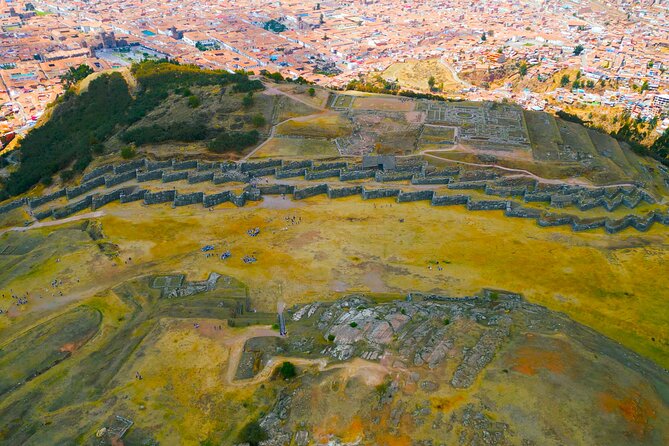
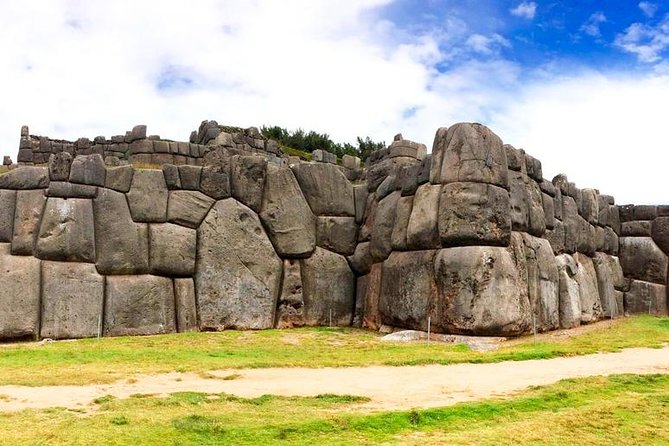
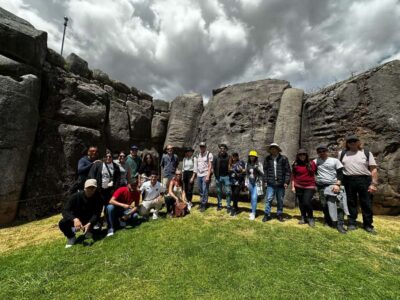
Sacsayhuaman is the first stop, with about 30 minutes set aside. The site is presented as an example of Inca military architecture, built from huge granite blocks and connected with the protection of Cusco.
This is the place where the scale of Inca construction becomes immediately clear. The stonework is not just neat masonry. Large blocks were shaped and fitted into walls that formed part of the city’s defensive system. Even with a short visit, you can focus on the size of the stones and the way the fortress occupies the high ground above Cusco.
Your guide matters here. Without context, Sacsayhuaman can look like a series of impressive walls and open spaces. With a good explanation, the site becomes easier to read as a military structure tied to the capital below.
Thirty minutes is enough for a brisk introduction, but not for an unhurried examination of every section. If Sacsayhuaman is the site you most want to study, consider using this tour to learn the basics and then deciding if you want a separate return visit. The admission ticket is not included, and this stop is covered by the 70 soles partial ticket for the four archaeological centers.
Q’enqo, a ritual site carved into limestone
Q’enqo offers a different mood. Rather than focusing on defense, this ritual center was built around a distinctive limestone rock outcrop. The site includes underground galleries and a semicircular amphitheater.
The contrast with Sacsayhuaman makes this stop valuable. You move from monumental walls to a place shaped around rock, ceremony, and enclosed spaces. The underground galleries are part of what gives Q’enqo its character, while the amphitheater adds a more formal sense of design.
The 30-minute visit is likely to focus on the central features rather than every corner. Pay attention to how the natural rock and built elements work together. This is one of the places where a guide’s interpretation can help you understand why the location mattered, rather than seeing it only as an unusual stone formation.
Q’enqo is also covered by the 70 soles partial ticket. Since admission is extra at every archaeological stop, keep your ticket money ready and avoid assuming the $15 fare covers entry.
Puka Pukara and the road into Cusco
Puka Pukara means red fortress in Quechua. It is described as a military construction made up of stairways, terraces, and large walls, part of the defense system serving the imperial capital.
The site adds an important practical element to the day. Sacsayhuaman shows the power of a major fortress, while Puka Pukara helps you think about the wider network supporting Cusco. Its terraces and stairways are not decorative extras. They form part of a built system designed around movement, position, and defense.
You have about 30 minutes here. That is enough time to see the principal remains and hear how Puka Pukara fits into the surrounding route. I would listen closely to the explanation of its role, since the site’s importance depends less on one famous monument than on its place within the empire’s defensive organization.
As with Sacsayhuaman and Q’enqo, admission is not included in the tour price. The 70 soles partial ticket covers the four archaeological centers visited during the circuit.
More Ruins & Archaeology Tours in Cusco
- Cusco: City Tour | Half-Day Tour to 4 Archaeological Sites
★ 4.6 · 206 reviews - Cusco City Sightseeing and Sacsayhuaman Archeological Park Tour
★ 4.5 · 101 reviews - Cusco: Historical Guided City Tour with 4 Inca Ruins
★ 4.5 · 99 reviews - Cusco: Half-Day City Tour with Sacsayhuaman and Qenqo
★ 4.5 · 77 reviews
Tambomachay, the Inca relationship with water
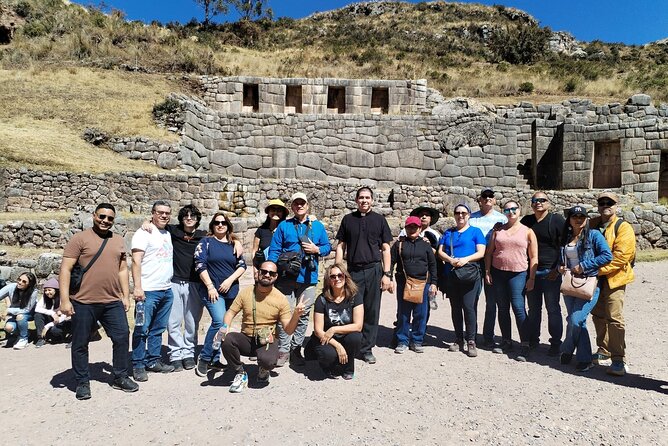
Tambomachay is also known as the Inca Bath. It is associated with the worship of water and with rest for the Inca monarch.
This stop changes the subject again. After military structures and ritual stonework, Tambomachay gives the route a chance to consider water as both a practical resource and a sacred force. The name helps explain why the site is often linked with bathing, fountains, and royal use, though the provided visit description keeps the focus on its water cult and royal connection.
The visit lasts about 30 minutes. Use that time to notice the site’s relationship with flowing water and its carefully arranged stonework. You do not need a long stop to understand the central idea, but the guide’s words can help connect the physical remains with Inca beliefs about nature and rulership.
Tambomachay is included among the four archaeological centers covered by the partial ticket. Bring the full 70 soles for that ticket, rather than budgeting only for the tour fare.
Qorikancha reveals the collision of two traditions
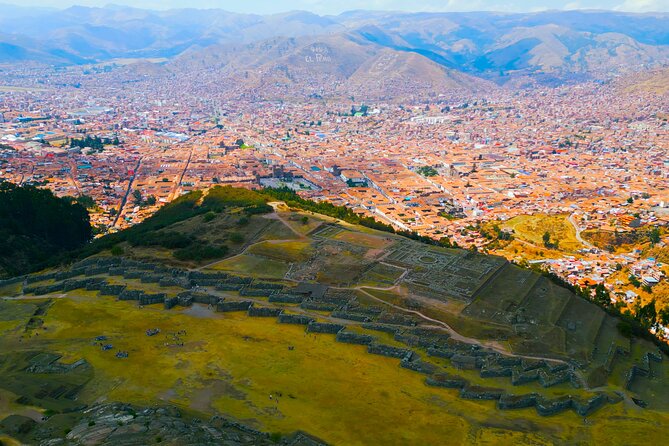
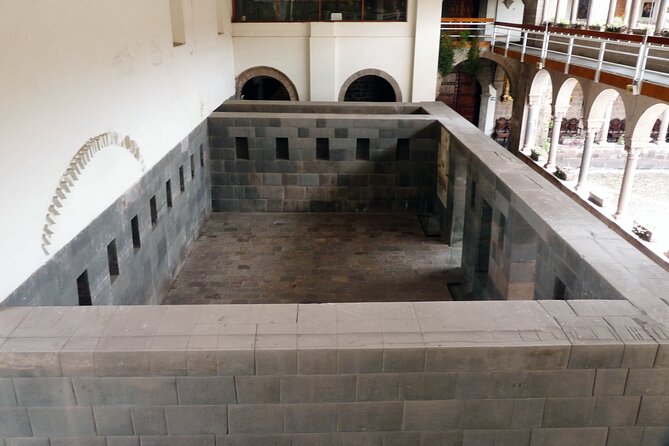
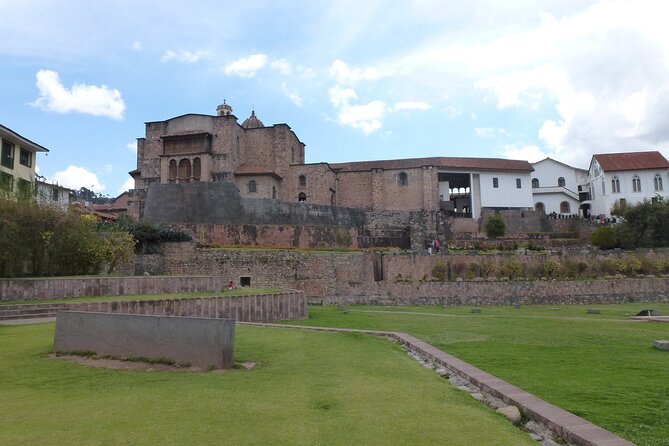
Qorikancha is the final stop and the only city-center site in this sequence. It was the most important temple during the Inca Empire and was later almost entirely destroyed by the Spanish during colonization.
That history gives Qorikancha a different weight from the hilltop sites. Here, the central issue is not only what the Incas built, but also what happened when Spanish rule reshaped Cusco. The remains offer a direct way to think about the meeting of Inca religious architecture and colonial change.
The visit is planned for about 30 minutes. That makes Qorikancha a concise introduction rather than a full museum-style examination. I would pay attention to the surviving Inca construction and to the way the site reflects the destruction and rebuilding described in the tour information.
Qorikancha has its own admission fee of 15 soles, separate from the 70 soles partial ticket for the four archaeological centers. This split is easy to miss when you first see the $15 tour price. Add both fees to your planning and you will have a clearer idea of the real cost.
What the $15 price really gives you
At $15 per person, the tour is priced as an economical way to connect several important sites. Tourist transportation and a professional guide are included, which is useful in Cusco because the sites are not all clustered together.
The low fare is most valuable if you would otherwise need to arrange several rides. It also gives you a guide who can connect the stops into one story. A driver alone could get you from place to place, but the historical and cultural context is a major part of why this route works.
The extra 85 soles for admission changes the calculation. You pay 70 soles for the partial ticket to the four archaeological centers and 15 soles for Qorikancha. Those charges are clearly excluded, so they are not a surprise if you plan ahead, but they make the total outing more than $15.
I see this as good value for an overview, not necessarily the best choice for someone seeking a private, slow-paced visit. The group can include up to 18 people. That is a reasonable ceiling for a shared tour, although you should still expect less personal attention than on a private outing.
The guide can shape the whole experience
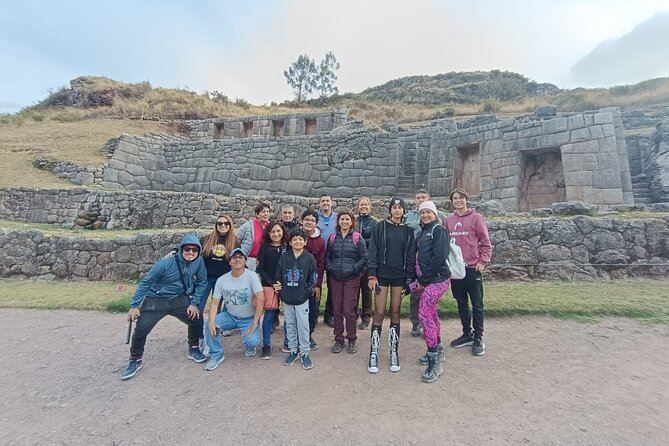
Guide Ivan receives particular praise for his warmth, attention, professionalism, and command of the sites. That matters on a route like this because several stops are best understood through their purpose and connections, not just their surviving walls.
A strong guide can help you separate a fortress from a ritual center, explain why water mattered at Tambomachay, and place Qorikancha within the larger story of Cusco. Ivan’s praised manner also suggests a tour that feels attentive rather than purely mechanical.
The service is offered in English. If you are comfortable following a spoken explanation while moving between sites, that makes the tour accessible without needing to arrange separate interpretation.
The information provided does not promise a private guide or guaranteed one-to-one attention. The group maximum is 18, so the experience remains shared. If you want to ask many detailed questions at every stop, a smaller format may suit you better.
Timing, meeting point, and practical planning
The listed starting point is F2MC+8F Cusco, Peru, and the activity ends back at the meeting point. Because the location is given as a map code, check it carefully before departure and allow time to reach it.
The tour is near public transportation, which may help if you are making your own way to the start. Transportation during the experience is included, so you do not need to arrange separate rides between the five locations.
Confirmation is received at booking. The operator also states that most people can participate. No special limitation is given in the supplied details, but the schedule is active, with several site visits in one half-day, so you should be comfortable keeping to a group timetable.
The tour is offered in English and accepts mobile tickets. Those details are useful if you want a straightforward booking process and do not want to print documents.
Cancellation is flexible up to a point. You receive a full refund if you cancel at least 24 hours before the local start time. Cancellations or changes made within 24 hours are not accepted for a refund, so make the decision before that cut-off.
Who will get the most from this tour
I would recommend this outing to a first-time Cusco visitor who wants a guided introduction to the city’s main Inca sites. It also fits anyone with only part of a day available, since the route gathers five distinct places into one organized trip.
It suits you especially well if you value:
- A low advertised tour price
- Included transportation between sites
- An English-speaking professional guide
- A moderate group size
- A quick introduction to several types of Inca sites
I would be more cautious if you want long, quiet visits. Each stop receives roughly 30 minutes, and that means the day favors coverage over depth. The extra entrance fees may also make the tour less attractive if you are comparing it with a self-guided visit and already have transportation arranged.
The route is also a good fit if you want help making sense of Cusco’s ancient sites. Sacsayhuaman, Q’enqo, Puka Pukara, Tambomachay, and Qorikancha are not interchangeable attractions. Their different functions give you a more complete picture of Inca life than visiting only one impressive ruin.
Should you book this Cusco city tour?
Book it if you want an inexpensive, guided overview with transport and five major stops in one half-day. The $15 price is attractive, the maximum group size of 18 is manageable, and the praise for Ivan’s attentive, professional approach is a strong reason to value the guided format.
Before paying, set aside 70 soles for the partial archaeological ticket and 15 soles for Qorikancha. If you accept the quick 30-minute visits and understand that admission is separate, this is a practical way to get your bearings around Cusco’s Inca heritage.
Skip it if your priority is private guiding, extended time at one site, or a completely flexible schedule. For most first-time visitors with limited time, though, this route offers a sensible introduction at a fair starting price.
FAQ
How long does the tour last?
The tour lasts approximately five hours and 30 minutes.
What places does the tour visit?
It visits Sacsayhuaman, Q’enqo, Puka Pukara, Tambomachay, and Qorikancha.
Are entrance fees included?
No. The partial ticket for the four archaeological centers costs 70 soles, and the Qorikancha entrance costs 15 soles.
Is transportation included?
Yes. Tourist transportation is included, and the activity ends back at the meeting point.
Is the tour offered in English?
Yes. English is the listed language for this activity.
How large is the group?
The tour has a maximum of 18 participants.
More Ruins and Archaeology near Cusco
- Cusco 4-Hour Private Tour Including Sacsayhuaman and Qenqo
★ 5.0 · 77 reviews - Half-Day City Tour of Cusco Including Tambomachay
★ 4.5 · 59 reviews - Sacsayhuaman Temple, Tambomachay and Puca Pucara Half-Day Tour
★ 4.5 · 59 reviews - Private Cusco City Tour with Sacsayhuaman & Inca Sites
★ 5.0 · 52 reviews
Added recently around Cusco
- Super valley or vip valley★ 5.0 · 13 reviews
- the Incas’ Sacred Valley★ 5.0 · 27 reviews
- Sacred Valley of the Incas Day Trip from Cusco★ 5.0 · 6 reviews
- Small-Group Tour: Rainbow Mountains Hiking from Cusco★ 4.0 · 5 reviews
- Excursion to the Sacred Valley of the Incas from Cusco★ 5.0 · 8 reviews
- Maras + Moray & Textile Experience★ 5.0 · 14 reviews
- Tour EN Cuatrimoto POR la Montaña 7 Colors Hike 5 Minutes★ 4.5 · 32 reviews
- rainbow mountain★ 4.0 · 4 reviews
Inca Ruins & Archaeological Sites, compared.
Half-Day City Tour with Sacsayhuaman and Q’enco
Read our review →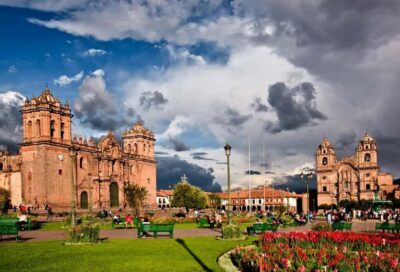
City Tour Cusco Qoricancha Sacsayhuaman y Tambomachay
Read our review →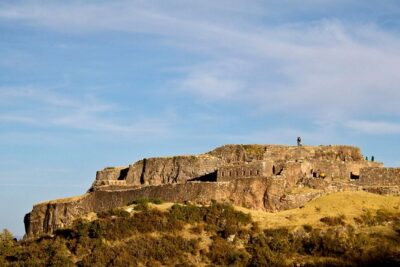
Pachacamac Ruins & Barranco Half-Day Guided Tour
Read our review →
Pre Inca Temple of Pachacamac Half-Day Tour from Lima
Read our review →
Tour to the Archaeological Sanctuary of Pachacamac (small group)
Read our review →
From Pyramids & Bohemian Streets: Lima Miraflores & Barranco Tour
Read our review →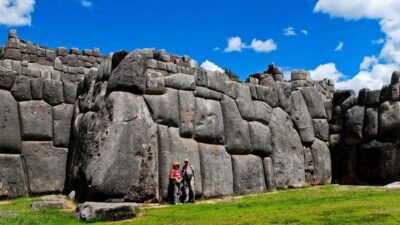
City Tour | Half-Day Tour to 4 Archaeological Sites
Read our review →Browse the lists this tour appears in