
Reviewed · SACRED VALLEY TOURS
Cooking Class in Ollantaytambo
Peru tastes best around a shared table. This three-hour evening class in Ollantaytambo combines a short local market visit with hands-on cooking in the Awamaki community, giving you more than a meal and a recipe. I especially like the small maximum of six people, which keeps the class personal, and the chance to cook with local teachers such as Jenny and Ruth. The main thing to consider is transport: you must make your own way to Ollantaytambo, and hotel or train-station pickup is not included.
The class begins at 4 p.m., a useful time for adding it to a Sacred Valley day. You shop for ingredients with a guide, then head to the Awamaki office or a local host’s home to prepare dinner. The warm welcome, home cooking, and chance to sit down together are the strongest parts of the experience, though the exact host and cooking setting may vary.
In This Review
- Key points to know before booking
- Why this Ollantaytambo class feels different
- Starting at the market in Ollantaytambo
- Cooking rocoto relleno and other Peruvian staples
- Sharing dinner instead of rushing away
- What the $68 price really covers
- Who should book this three-hour experience
- Practical details that matter
- Should you book the Awamaki cooking class?
- FAQ
- Where does the cooking class begin?
- What time does the class start?
- How long does the experience last?
- How many people can join the class?
- Is transportation included?
- What food might I prepare?
- Is dinner included?
- Can I cancel for a full refund?
Key points to know before booking
- A local market visit comes first: You help choose ingredients instead of simply arriving at a ready-made kitchen.
- The group is capped at six: This gives you more room to ask questions and take part in the cooking.
- You prepare classic Peruvian dishes: Possible recipes include rocoto relleno and papa a la Huancaina, with causa also listed as a starter.
- The cooking may happen in a local home: Past classes have been hosted by Tina and Irma, creating a friendly, personal evening.
- Your $68 includes dinner and recipes: Ingredients, an English-speaking guide or interpreter, a local teacher, and an online recipe book are included.
- Plan your own arrival: The meeting point is La Esquinaplaza de Armas in Ollantaytambo, and the activity returns there.
Why this Ollantaytambo class feels different
Many cooking classes give you a counter, a knife, and a recipe card. This one adds a small piece of daily life in the Sacred Valley. You begin at the market, where a local guide helps you select ingredients for the meal. That simple step matters. Food becomes easier to understand when you see the produce, discuss what you are buying, and connect the finished dish with the place where its ingredients came from.
The class is run through Awamaki, with local cooking teachers and community partners. Jenny and Ruth are named as the cooking teachers, while past class arrangements have included a local host named Tina and another host named Irma, with Melissa serving as the Awamaki liaison and translator in one session. Since the host can vary, you should expect the same basic structure but not necessarily the same kitchen or teacher each time.
I like the scale here. With no more than six participants, you are not lost at the back of a large demonstration. You should have a real chance to help prepare the food, ask questions, and follow the process from raw ingredients to dinner. For families, that hands-on format can be more engaging than a formal lecture. For food lovers, it gives you a practical look at Peruvian flavors without making the evening feel like a cooking exam.
The class lasts about three hours and begins at 4 p.m. That timing lets you spend the earlier part of the day sightseeing in the Sacred Valley, then settle into an evening activity. It also means you should avoid scheduling a train departure or a tight connection around the class. The meeting point is in Ollantaytambo’s main plaza area, and the activity ends back at the meeting point.
More Cooking Classes in Cusco
- Peruvian Cooking Class Cocktails and Market Tour in Cusco
★ 5.0 · 1,712 reviews - Cusco Cooking Classes and San Pedro Market Tour
★ 5.0 · 691 reviews - Cusco: Peruvian Cooking Class, Cocktails & Local Market Tour
★ 4.9 · 512 reviews
Starting at the market in Ollantaytambo
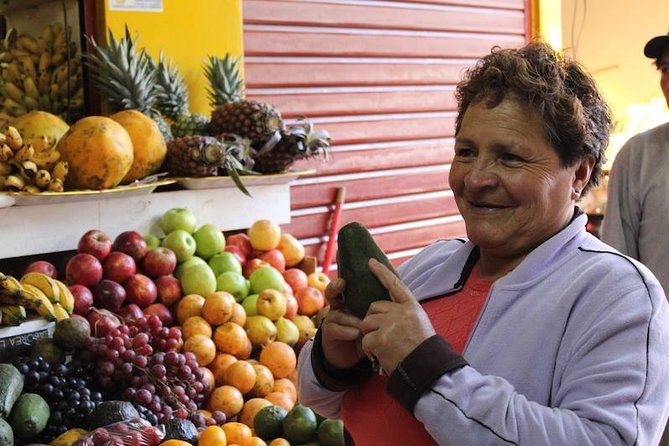
The market visit is brief, but it gives the class its local footing. Instead of finding every ingredient already measured and waiting on a counter, you go out with your guide to choose what will become dinner. The guide or interpreter helps bridge the language gap and gives context as you shop.
Do not expect a long market tour with a separate sightseeing program. The purpose is practical: select ingredients, learn a little about them, and return to the cooking location. That focus is a plus if you want a useful food experience rather than another general walk around town.
For you, the best approach is to pay attention to the small decisions. Notice which ingredients are selected for the sauce, filling, or garnish. Ask questions while you are there. The provided information does not promise a set list of market stalls or a fixed shopping route, so the experience may change with the day’s cooking plan and local availability.
The market stop also helps families stay involved. Children can see the food before it appears on the plate, and adults get a better sense of how traditional dishes are built. Since the class is in English, the guide can interpret the process for you, though the activity may sometimes be operated by a multilingual guide.
Cooking rocoto relleno and other Peruvian staples
The main cooking lesson centers on traditional Peruvian food. One possible dish is rocoto relleno, a spicy rocoto pepper stuffed with seasoned meat or vegetables and baked. It is a bold choice for a class because the pepper carries heat as well as flavor. If you are sensitive to spice, ask about the filling and pepper before you begin.
Another possible main is papa a la Huancaina, potatoes served with a cheese and pepper sauce. This dish offers a gentler introduction to Peruvian cooking than rocoto relleno, while still showing how a simple ingredient can become a memorable meal through sauce and seasoning.
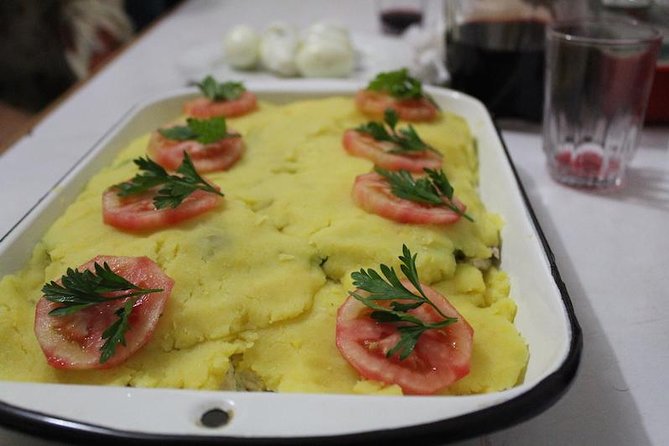
The sample menu lists causa as the starter. Causa is made from a lemony potato mash layered with shredded chicken or avocado and vegetables, then served cold. It is a good teaching dish because it shows the importance of texture, color, and presentation without requiring a complicated cooking method.
The exact combination deserves a little clarification. The experience description presents rocoto relleno or papa a la Huancaina as possible dishes, while the sample menu includes causa, rocoto relleno, and chicha morada. You should view the menu as a guide rather than a guarantee of every item. If a certain dish matters to you, confirm the plan after booking.
The cooking takes place at the Awamaki office according to the main description. Past arrangements have also used a host’s home. One class was led by Tina, with Melissa helping as liaison and translator. Another included Irma welcoming the group into her home. That home setting was especially meaningful because the meal was prepared and shared in the same place, rather than in a restaurant-style classroom.
You may find the setting changes the tone of the evening. An office can offer a clear teaching space, while a local home can feel more personal and social. Neither is automatically better. The home option adds a direct connection with the host, but the office may feel more structured. The important point is that this is designed around local teachers and community partners, not only a professional chef demonstrating from a distance.
Sharing dinner instead of rushing away
At the end, you sit down to eat the meal you helped make. That sounds simple, but it is the part that turns a cooking lesson into a cultural exchange. You are not just tasting a dish prepared for you. You can connect the finished food with the market visit, the preparation, and the person who taught you.
The meal may include a causa starter, rocoto relleno or another traditional dish, and a Peruvian drink. Chicha morada is a lightly sweet purple corn drink flavored with cinnamon, pineapple, and other typical ingredients. Limonada may also be served as a traditional refreshment.
The supplied menu labels chicha morada as dessert, although it is described as a drink. Think of it as part of the meal rather than a conventional dessert course. This is a small point, but it helps set your expectations. You are getting dinner and a regional beverage, not necessarily a separate baked or sweet dessert.
The food is one of the class’s strongest draws. Past participants have particularly praised the delicious meal and the chance to socialize while it cooked. I would book this for the shared table as much as for the recipes. If you prefer to eat quickly and move on, the slower meal may feel less efficient. If you enjoy conversation and home-style hospitality, it is likely to be the evening’s best part.
More Sacred Valley days out:
- From Cusco: Moray, Maras Salt Mines & Chinchero Weavers Tour
★ 4.8 · 1,925 reviews - 2-Day Tour: Sacred Valley and Machu Picchu by Train
★ 5.0 · 1,127 reviews - Cusco: Sacred Valley, Pisac, Ollantaytambo, Salt Mines Moray
★ 4.6 · 1,058 reviews - Cusco:Chinchero,Moray & Salt Mines drop-off in Ollantaytambo
★ 4.8 · 793 reviews
What the $68 price really covers
At $68 per person, this is not the cheapest way to have dinner in Peru. You can eat a local meal for less. The value comes from the full package: a guide or interpreter, a local cooking teacher, all ingredients, the class itself, dinner, and an online recipe book.
The market visit also adds time and context that a restaurant meal cannot provide. You see what goes into the dishes, take part in making them, and leave with instructions you can use later. That makes the price easier to justify for people who want an activity, not simply food.
The six-person limit helps the value. You are paying for access to a small class rather than a large group where your role might be limited to watching. Still, keep your expectations reasonable. The online recipe book is included, but the information does not specify a printed cookbook or a physical souvenir. If you want a paper copy, bring a way to save or print the recipes later.
Dinner is included, but transportation is not. There is no hotel pickup or drop-off, and train-station transfers are excluded. You also need to arrange your own route from Cusco, Urubamba, or another town to Ollantaytambo. That can affect the real cost, especially if you are building the class into a larger day of sightseeing.
The tour is often booked well ahead, with an average booking lead time of 109 days. That does not guarantee that you must reserve months in advance, but it is a useful warning for peak travel periods. Confirmation arrives within 48 hours, subject to availability.
Who should book this three-hour experience
I would recommend this class most strongly to families, couples, and food-focused visitors who want a social evening in the Sacred Valley. The small group, simple timing, and practical recipes make it approachable. You do not need to be an experienced cook to take part.
It also suits anyone who values a community connection. The class is tied to Awamaki’s work with Andean communities, and the teaching is provided through local cooking partners. You get a closer look at Peruvian life through food, without pretending that a three-hour class can explain an entire culture.
The class may be less suitable if you need guaranteed menu choices. The description allows for different dishes, and the cooking teacher or setting may vary. It may also be a poor fit if you have a strict dislike of spicy food and cannot confirm whether papa a la Huancaina will be served instead of rocoto relleno.
You should also think about the logistics. The class starts at 4 p.m. in Ollantaytambo and ends there. If you are staying elsewhere in the Sacred Valley, you need to plan the return trip yourself. Do not assume the operator will collect you from a hotel, station, or nearby town.
Practical details that matter
The meeting point is La Esquinaplaza de Armas, Ollantaytambo 08676, Peru. The activity ends at the same meeting point. A mobile ticket is accepted, and the class is offered in English.
Service animals are allowed, and the location is near public transportation. The group maximum is six people. These details make the class easier to fit into a day in town, though they do not remove the need to plan your own transport.
Free cancellation is available if you cancel at least 24 hours before the 4 p.m. start time. A cancellation made less than 24 hours before the class is not refundable, and changes inside that window are not accepted. The cut-off uses local time in Peru.
The experience has a top rating from four reviews, a small sample but a consistently positive one. The praise centers on the friendly hosts, the food, the welcoming home setting, and the sense of learning about Peruvian life. Those are the features I would use to judge the class, rather than expecting a polished culinary school or a long market tour.
Should you book the Awamaki cooking class?
Book it if you want a small, friendly, hands-on evening and you are willing to arrange your own way to Ollantaytambo. The strongest reason to go is the combination of market shopping, local instruction, and a shared dinner. The warm hosts, including teachers such as Tina and Irma in past classes, add a personal touch that a standard restaurant cannot match.
Skip it if your priority is the lowest-cost dinner, a fixed menu, or door-to-door transportation. You should also confirm the planned dishes if spice level or dietary needs matter to you. For most food lovers and families spending time in the Sacred Valley, the $68 price is fair because it pays for participation, not just a plate of food.
FAQ
Where does the cooking class begin?
It begins at La Esquinaplaza de Armas in Ollantaytambo, Peru.
What time does the class start?
The class starts at 4 p.m.
How long does the experience last?
The cooking class lasts approximately three hours.
How many people can join the class?
The activity has a maximum of six travelers.
Is transportation included?
No. Transportation to Ollantaytambo from Cusco, Urubamba, or other cities is not included. Hotel pickup, hotel drop-off, and train-station transfers are also excluded.
What food might I prepare?
Possible dishes include rocoto relleno, papa a la Huancaina, and causa. The meal may also include limonada or chicha morada.
Is dinner included?
Yes. Dinner, all necessary cooking ingredients, an English-speaking guide or interpreter, a local cooking teacher, and an online recipe book are included.
Can I cancel for a full refund?
Yes, if you cancel at least 24 hours before the experience start time. Cancellations or changes made less than 24 hours before the start are not accepted for a refund.
More Cooking Sessions in Cusco
- Hands-on Peruvian Cooking Class & San Pedro Market Visit in Cusco
★ 5.0 · 421 reviews - Local Market and Peruvian Cooking Class with Pisco Sour in Cusco
★ 5.0 · 384 reviews - Traditional Peruvian Cooking Class and Market Tour in Cusco
★ 5.0 · 375 reviews - Group Cooking Class in Cusco with Pisco Tasting
★ 5.0 · 335 reviews
Added recently around Cusco
- Guided tour of the mountain of colors in Cusco★ 5.0 · 11 reviews
- 2-Day Private Short Inca Trail to Machu Picchu★ 5.0 · 15 reviews
- City Tour Cusco – Group★ 5.0 · 4 reviews
- Tour Sacred Valley with Maras and Moray★ 5.0 · 15 reviews
- San Pedro Market Tour with Peruvian Cooking Class★ 5.0 · 31 reviews
- Walking Culinary Experience★ 5.0 · 41 reviews
- City Tour in Cusco★ 4.5 · 10 reviews
- One Day Tour to Humantay Lagoon★ 5.0 · 8 reviews
Sacred Valley Tours, compared.
Sacred Valley & Maras Salt Mines Tour with Lunch
Read our review →
Moray, Maras Salt Mines & Chinchero Weavers Tour
Read our review →
2-Day Tour: Sacred Valley and Machu Picchu by Train
Read our review →
Sacred Valley, Pisac, Ollantaytambo, Salt Mines Moray
Read our review →
Chinchero,Moray & Salt Mines drop-off in Ollantaytambo
Read our review →
Sacred Valley and Maras Moray Tour with Full Day Buffet Lunch
Read our review →

Browse the lists this tour appears in