
Reviewed · INCA RUINS & ARCHAEOLOGICAL SITES
Cusco City Tour & Archeological Circuit
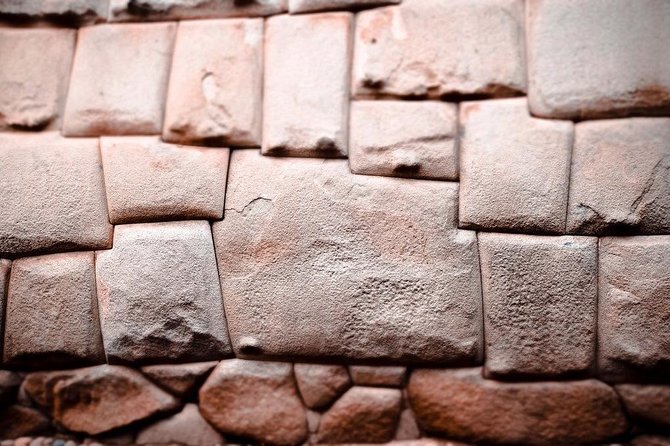
Cusco makes its past hard to miss. This four-hour tour links the city’s Inca and colonial core with the major ruins above town, including Sacsayhuaman, Qenqo, Puca Pucara, and Tambomachay. I like the compact route and the chance to hear the sites explained by a local guide instead of simply walking among impressive stones without context.
I also like the small maximum group of 10, which should make questions and conversation easier. The main drawback is the tight schedule: fitting the historic center, Qorikancha, and four nearby archaeological sites into about four hours means you will get an overview, not a slow archaeological study. Hotel pickup is not included, and food and drinks are extra.
In This Review
- Key points to know before you book
- Why this is a smart first look at Cusco
- The Main Square gives you your Cusco bearings
- Qorikancha shows the sacred center of Inca Cusco
- Sacsayhuaman is the reason many people choose this route
- Qenko offers a more enclosed and mysterious stop
- Puca Pucara and Tambomachay complete the northern circuit
- What the guide adds to the stonework
- Is $50 a fair price?
- Timing, meeting point, and physical demands
- Who will get the most from this tour?
- My verdict: book it for orientation, not exhaustive study
- FAQ
- How long does the Cusco City Tour and Archeological Circuit last?
- What time does the tour start?
- Where does the tour start?
- Is hotel pickup included?
- Which places are included?
- Is a guide included?
- Are food and drinks included?
- How large can the group be?
- Is the tour suitable for children?
- Can I cancel for a full refund?
Key points to know before you book
- Sacsayhuaman is the major event: The fortress offers wide views over Cusco and huge carved stones, some more than 9 feet tall and weighing over 350 tons.
- Six important stops fit into four hours: You visit the Main Square, Qorikancha, Sacsayhuaman, Qenqo, Puca Pucara, and Tambomachay.
- A guide adds real value: The tour is designed around explanations of Inca civilization, not just quick photo stops.
- The group is capped at 10 people: That is a useful middle ground between a private tour and a large coach outing.
- Plan for some exertion: A moderate level of physical fitness is required.
- The price is $50 per person: That is fair for a guided half-day introduction, though you should confirm exactly which entrance fees are covered.
Why this is a smart first look at Cusco
Cusco can feel confusing at first. The streets twist, the altitude can slow you down, and the city’s Inca foundations are often hidden beneath later Spanish buildings. This tour gives you a quick framework for understanding the place.
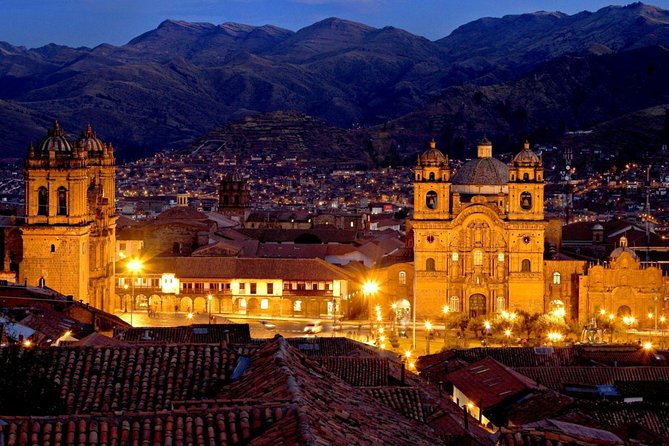
You begin with a panoramic look at the Main Square, the city’s central reference point. From there, the route moves to Qorikancha, the Temple of the Sun, before heading toward the larger ruins outside the center. The order brings together two different sides of Cusco: the sacred and political heart of the city, then the defensive, ceremonial, and water-related sites on the hills above it.
I see the route as a useful orientation tour rather than a complete study of Cusco. In four hours, you can learn where the main sites are, see the most famous stonework, and decide which places deserve a longer return visit.
The experience is also limited to about 10 people. That matters in Cusco, where a guide can easily lose a large group among narrow streets, busy viewpoints, and uneven ruins. A small group usually gives you a better chance to hear the explanation and ask about the details that catch your eye.
More City Tours in Cusco
- Cusco: Half-Day City Tour with Sacsayhuaman and Q’enco
★ 4.6 · 1,129 reviews - City Tour Cusco Qoricancha Sacsayhuaman y Tambomachay
★ 4.7 · 617 reviews - Cusco City Tour Four Ruins in Half-Day
★ 5.0 · 530 reviews
The Main Square gives you your Cusco bearings
The tour includes a panoramic visit to Cusco’s Main Square. Even without a long stop, this is a useful beginning because the square helps you understand how the modern city was organized around an older Inca center.
The word panoramic matters here. You should not expect a lengthy guided walk through every building around the plaza. Instead, you get an overview before moving on to the archaeological sites. That makes sense on a four-hour schedule, but anyone wanting a full colonial architecture tour should plan a separate visit.
The square also sets up the contrast that defines Cusco. Spanish-era buildings occupy the center, while Inca foundations and stonework remain part of the city beneath and around them. A good guide can help you see that the past is not confined to an isolated ruin outside town.
Qorikancha shows the sacred center of Inca Cusco
Qorikancha, also called the Temple of the Sun, is one of the most important stops in the city portion of the tour. Its name is often translated as Golden Enclosure, and the site was a major religious center under the Incas.
Here, the value of a guide is especially clear. Stones alone do not explain why the temple mattered, how the Inca used sacred spaces, or how the site fits into the larger design of Cusco. Your guide provides the civilization and religious background that turns a short visit into something more meaningful.
The visit is described as part of a panoramic city tour, so you should keep your expectations measured. This is not presented as an extended museum visit or a detailed architectural workshop. It is a focused introduction before the route heads to the hilltop complexes.
Also check the entrance arrangement before booking. The information confirms the activities and professional guide, but it does not clearly state whether all site entrance tickets are included. At $50, the tour can still offer good value, but knowing your likely extra costs will prevent surprises.
Sacsayhuaman is the reason many people choose this route
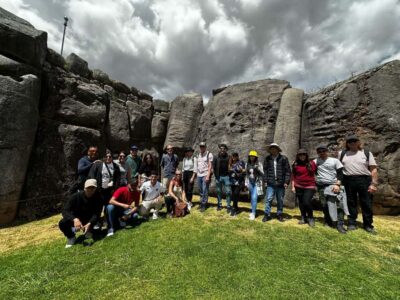
Sacsayhuaman is the centerpiece. The fortress was built on a hill above Cusco and gives you a striking view back toward the city. It is also famous for its enormous stone walls, made from blocks cut and fitted with remarkable precision.
Some stones are more than 9 feet tall and weigh over 350 tons. Those figures are impressive, but the better experience is standing beside the walls and seeing how their scale defeats ordinary judgment. Photographs flatten the stones. In person, the uneven shapes and tight joins are easier to appreciate.
The site is often described as a fortress, though its role was also tied to ceremony and the defense of Cusco. Your guide’s explanation of Inca civilization should help you place the structure in its wider setting rather than treating it as a giant pile of masonry.
The hilltop location brings two practical points. First, you get excellent views over the ancient city. Second, walking around the complex may require a moderate level of fitness. The tour does not promise a strenuous hike, but uneven archaeological ground and the altitude around Cusco can make a short visit feel more demanding than it looks on paper.
Give yourself room for the viewpoint. A rushed stop at Sacsayhuaman would miss much of its appeal. At the same time, because the tour includes several more sites, you should not expect unlimited time among the walls.
More Ruins & Archaeology Tours in Cusco
- Cusco: City Tour | Half-Day Tour to 4 Archaeological Sites
★ 4.6 · 206 reviews - Cusco City Sightseeing and Sacsayhuaman Archeological Park Tour
★ 4.5 · 101 reviews - Cusco: Historical Guided City Tour with 4 Inca Ruins
★ 4.5 · 99 reviews - Cusco 4-Hour Private Tour Including Sacsayhuaman and Qenqo
★ 5.0 · 77 reviews
Qenko offers a more enclosed and mysterious stop
Qenko, also spelled Qenqo, is one of the archaeological complexes on the circuit. Compared with Sacsayhuaman, it is a smaller and more intimate site, with carved stone features and spaces that invite questions about ceremony and ritual.
This is the kind of place where a guide can help you avoid a shallow visit. Without explanation, you may see a carved rock and a few stone passages. With context, you can better understand how the Incas shaped natural stone and used the site.
The available schedule does not give individual times for Qenko. That means your visit will be part of a fast-moving circuit. If you prefer to examine every carved surface at length, a private or longer archaeological visit may suit you better. For a first pass through the main ruins, the stop adds useful variety.
Puca Pucara and Tambomachay complete the northern circuit
Puca Pucara is another archaeological complex included in the tour. Its name is commonly associated with a red fortress, and its position near the route above Cusco helps explain why it was useful as part of the wider network around the city.
The appeal here is not only the remaining stonework. The site helps you see that Cusco was connected to a planned system of roads, watch points, ceremonial spaces, and waterworks. Your guide’s comments about Inca society should give you a clearer sense of that larger organization.
Tambomachay provides a different mood. It is associated with water and carefully arranged channels and fountains. Rather than the massive defensive appearance of Sacsayhuaman, this stop draws attention to the Incas’ control of water and their ability to integrate practical systems with ceremonial meaning.
Both sites benefit from being visited together. You can compare their functions instead of seeing each ruin as an unrelated stop. The drawback is time. Four archaeological sites outside the city, plus two central locations, create a brisk morning. You will see the main features, hear an explanation, and move on.
What the guide adds to the stonework
The experience includes a professional guide, and that is the part I consider most important. Cusco’s ruins are visually powerful, but their purpose is not always obvious. The guide is there to explain the Inca civilization and connect the sites to one another.
The strongest praise attached to the wider service is directed at organization, guide quality, punctuality, and support. Several accounts describe local guides as engaging, professional, and able to explain clearly in Italian. That language detail will matter greatly if you are more comfortable touring in Italian, though you should confirm the language available for your specific departure.
The broader service has also been associated with carefully planned timing and quick assistance through WhatsApp. Those comments refer to wider Peru itineraries, so I would not treat them as a guarantee of every detail on this four-hour tour. Still, they suggest a company that pays attention to coordination rather than simply assigning a guide and leaving you to sort out the rest.
For this particular outing, ask the guide questions. How did the sites relate to one another? Which features are original? What was ceremonial, defensive, or practical? A short tour becomes far more rewarding when you use the guide as an interpreter, not just a person who points out the next ruin.
Is $50 a fair price?
At $50 per person, this is a reasonable price for a guided half-day route covering both central Cusco and the main archaeological sites above town. You are paying for the guide, the planned sequence, and the convenience of seeing several major places in one morning.
The value is strongest if you have limited time in Cusco. You can cover the major circuit without arranging each stop separately, and a guide helps you understand what you are seeing. The small group limit also makes the price more attractive than a large sightseeing outing.
The value is less clear if entrance tickets are additional and you already know the sites well. The supplied details do not spell out the ticket arrangement, so confirm it before paying. Food and drinks are not included, but that is easy to manage during a four-hour morning.
The tour is also booked, on average, 94 days ahead. That does not mean every date sells out, but it is a useful warning for anyone planning a fixed Peru itinerary. If this circuit is important to your schedule, reserving early is sensible.
Timing, meeting point, and physical demands
The listed start time is 8:30 a.m. The starting location is given as the Cusco Region, with the guide meeting you at a pickup point. Hotel pickup is not included, although the description says a hotel meeting can be arranged if required. Treat that as something to confirm in advance, not as a standard inclusion.
The tour lasts about four hours. Since food and drinks are not included, eat beforehand and bring anything you need for the morning. No meal break is promised, and stopping for food would reduce time at the sites.
You should have a moderate level of physical fitness. The route includes archaeological complexes and a fortress on a hill, so expect walking over uneven ground and some time outdoors. The information does not provide a detailed accessibility plan, so anyone with mobility concerns should ask about surfaces, steps, and vehicle access before booking.
Children must be accompanied by an adult. A child rate is available only when the child shares with two paying adults. That rule is worth checking carefully if you are booking for a family.
Who will get the most from this tour?
I would choose this tour if you are new to Cusco, have only one morning free, or want a clear introduction before visiting more complex sites elsewhere in Peru. It gives you the city center, the most famous fortress, and three additional archaeological sites in one compact route.
It also suits people who prefer a guide’s explanation to independent reading. The route is full of names and unfamiliar functions, and a good explanation can make the difference between seeing old walls and understanding a planned Inca center.
I would be more cautious if you dislike quick stops or want to photograph every angle. The four-hour format has to keep moving. If you need a slower pace, a private arrangement may be better, although the price and format of such an option are not provided here.
The small group is a strong middle choice. You avoid the scale of a big coach tour without paying for a fully private experience. The overall service has earned a perfect 5 rating from 32 submitted reviews and a 100 percent recommendation rate, which supports its reputation for organization and guide quality. Still, those figures cannot remove the basic limitation: this is a short overview of a large subject.
My verdict: book it for orientation, not exhaustive study
I recommend the Cusco City Tour and Archeological Circuit for a first morning in the city. Sacsayhuaman is the highlight, while Qorikancha gives the route a needed urban and sacred center. Qenko, Puca Pucara, and Tambomachay make the outing feel like a real circuit rather than a single-ruin visit.
Book it if you want efficient sightseeing, a professional guide, and a small group at a fair $50 price. Before confirming, ask about entrance tickets, the exact meeting point, hotel pickup, and the guide’s language.
Skip it if you want a slow, specialized archaeology tour. For everyone else, this is a practical way to get your bearings in Cusco and see the stonework that makes the city unforgettable.
FAQ
How long does the Cusco City Tour and Archeological Circuit last?
The tour lasts approximately four hours.
What time does the tour start?
The listed start time is 8:30 a.m.
Where does the tour start?
The starting location is listed as the Cusco Region in Cusco, Peru. The guide meets you at the designated pickup point.
Is hotel pickup included?
Hotel pickup is not included. The tour information says a hotel meeting may be arranged if required, so confirm this with Peruresponsabile before booking.
Which places are included?
The route includes a panoramic tour of Cusco’s Main Square, Qorikancha, Sacsayhuaman, Qenko, Puca Pucara, and Tambomachay.
Is a guide included?
Yes. A professional guide is included.
Are food and drinks included?
No. Food and drinks are not included in the price.
How large can the group be?
The activity has a maximum of 10 participants.
Is the tour suitable for children?
Children may join, but they must be accompanied by an adult. The child rate applies only when sharing with two paying adults.
Can I cancel for a full refund?
Yes. You can cancel at least 24 hours before the local start time for a full refund. Cancellations or changes made less than 24 hours before the start are not accepted for a refund.
More Ruins and Archaeology near Cusco
- Cusco: Half-Day City Tour with Sacsayhuaman and Qenqo
★ 4.5 · 77 reviews - Sacsayhuaman Temple, Tambomachay and Puca Pucara Half-Day Tour
★ 4.5 · 59 reviews - Private Cusco City Tour with Sacsayhuaman & Inca Sites
★ 5.0 · 52 reviews - Private Ollantaytambo, Pisac Ruins Tour with Farm Visit, Gourmet Picnic Lunch
★ 5.0 · 52 reviews
Added recently around Cusco
- Guided tour of the mountain of colors in Cusco★ 5.0 · 11 reviews
- 2-Day Private Short Inca Trail to Machu Picchu★ 5.0 · 15 reviews
- City Tour Cusco – Group★ 5.0 · 4 reviews
- Tour Sacred Valley with Maras and Moray★ 5.0 · 15 reviews
- San Pedro Market Tour with Peruvian Cooking Class★ 5.0 · 31 reviews
- Walking Culinary Experience★ 5.0 · 41 reviews
- City Tour in Cusco★ 4.5 · 10 reviews
- Rainbow Mountain Small-Group Full-Day Hike from Cusco with Meals★ 4.5 · 15 reviews
Inca Ruins & Archaeological Sites, compared.
Half-Day City Tour with Sacsayhuaman and Q’enco
Read our review →
City Tour Cusco Qoricancha Sacsayhuaman y Tambomachay
Read our review →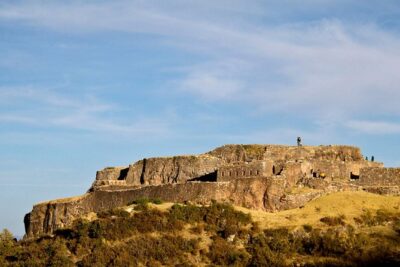
Pachacamac Ruins & Barranco Half-Day Guided Tour
Read our review →
Pre Inca Temple of Pachacamac Half-Day Tour from Lima
Read our review →
Tour to the Archaeological Sanctuary of Pachacamac (small group)
Read our review →
From Pyramids & Bohemian Streets: Lima Miraflores & Barranco Tour
Read our review →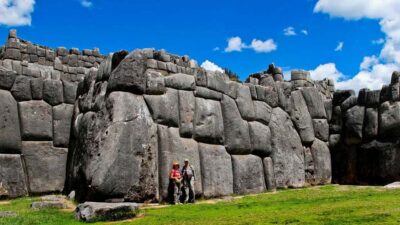
City Tour | Half-Day Tour to 4 Archaeological Sites
Read our review →Browse the lists this tour appears in