
Reviewed · INCA RUINS & ARCHAEOLOGICAL SITES
Cusco Half Day City Tour: Four Ruins
Ancient stones tell Cusco’s story best. This six-hour small-group outing links four major Inca sites just outside the city, giving you a useful first look at Cusco’s ceremonial, military, and water traditions without committing to a full-day excursion. I like the maximum group size of 15, which keeps the experience more personal, and I like the bilingual guides, especially guides such as Edith and Freddy, who have been praised for clear explanations and thoughtful help.
The tour also offers strong value at $45 per person because transport and guiding are included. The main caution is timing: although the tour is advertised at about six hours, one booking lasted closer to four hours, and another began 30 to 40 minutes late. You should also budget PEN70 for the archaeological sites, with an additional PEN20 if Qorikancha is part of your arrangements.
In This Review
- Four details that shape the experience
- Starting in central Cusco at 10 a.m.
- Sacsayhuaman: Cusco’s giant stone gateway
- Q’enqo: A carved temple full of unanswered questions
- Puka Pukara: The Inca road in working order
- Tambomachay: Water, stone, and a quiet finish
- What $45 really gets you
- The pace, group size, and walking demands
- Who will get the most from this tour?
- Should you book the Four Ruins tour?
- FAQ
- How much does the Cusco Four Ruins tour cost?
- How long does the tour last?
- What time does the tour start?
- Where does the tour begin?
- Where does the tour end?
- Is transportation included?
- How large is the group?
- Can I cancel for a full refund?
Four details that shape the experience
- Sacsayhuaman gives you the grand opening: Giant zigzag walls and wide views over Cusco make this the most dramatic stop.
- Q’enqo brings mystery into the tour: Its carved rock channels, chambers, and amphitheater raise questions that no guide can answer with complete certainty.
- Puka Pukara shows the practical side of Inca travel: Terraces, rooms, roads, canals, and a possible resting post help explain how the empire worked.
- Tambomachay ends with flowing water: Springs, channels, and stepped stonework create the calmest stop of the four.
- Small groups help at the sites: With no more than 15 people, you have a better chance of hearing the guide and keeping a steady pace.
- The altitude matters: Walking and stairs can leave you breathless, especially before you have adjusted to Cusco’s high elevation.
Starting in central Cusco at 10 a.m.
The meeting point is Heidi Travel EIRL at C. Plateros 324, Cusco. The advertised start time is 10 a.m., and the tour returns to this same meeting point.
That central start works well if you are staying near Cusco’s historic center. You do not need to arrange separate transport to the ruins, and the drives between the sites are short enough that the van does not dominate the day. One booking found the vehicle comfortable, though every seat was occupied, so you should expect a full small-group vehicle rather than a private ride.
The tour is offered in English and Spanish. A good guide makes a real difference here because the stones alone cannot explain how each site functioned. Edith was praised for speaking clearly in both languages and adjusting her pace for the group. Freddy also received warm comments for maintaining clear English communication and offering useful suggestions about other things to see in Cusco.
There is a practical wrinkle at the start. One experience began 35 minutes late, and another had a 30 to 40-minute wait while the operator sorted out group arrangements. I would avoid scheduling a flight, train, or timed museum visit immediately after the tour. The advertised duration is approximately six hours, but the actual time can vary.
More City Tours in Cusco
- Cusco: Half-Day City Tour with Sacsayhuaman and Q’enco
★ 4.6 · 1,129 reviews - City Tour Cusco Qoricancha Sacsayhuaman y Tambomachay
★ 4.7 · 617 reviews - Cusco City Tour Four Ruins in Half-Day
★ 5.0 · 530 reviews
Sacsayhuaman: Cusco’s giant stone gateway
Sacsayhuaman is the first major stop and usually the one that stays in your mind longest. Its name in Quechua is generally translated as place where the hawk is satiated, a fitting name in a high site where hawks were said to be present.
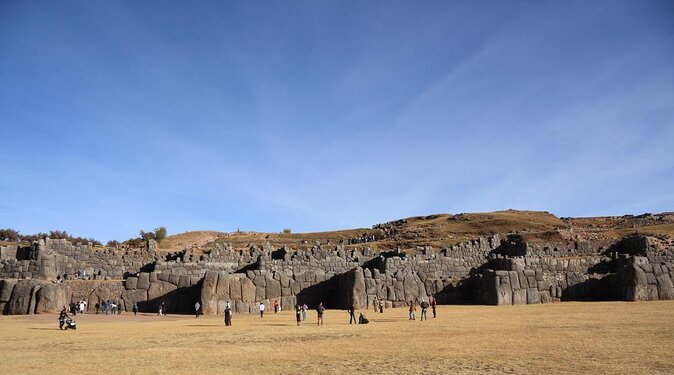
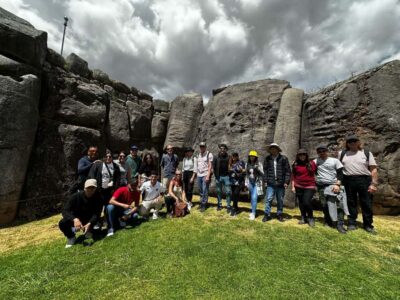
The first sight is the enormous zigzag wall. Some stones reach about five meters high and are estimated to weigh between 90 and 125 tons. They fit together without the use of mortar, with carefully worked joints that make the construction feel almost impossible when you stand beside it.
The Spanish called Sacsayhuaman a fortress because of its strong military appearance. That description is useful, but incomplete. The complex also contained sacred structures, residences, towers, shrines, storage areas, roads, and aqueducts. It may have served both practical and ceremonial purposes.
Your guide can help you see the site as more than a wall. The zigzag form, the terraces, and the wide open spaces suggest careful planning tied to Inca beliefs and power. The site also played a part in the Inca resistance during the Spanish attack in the 16th century, when it served as a fortress.
Allow about an hour here. You will have time to take in the views over Cusco and, on clear days, see the mountain summits of Ausangate, Pachatusán, and Cinca. These peaks held sacred meaning for the Inca, so the view is part of the site’s importance, not simply a pleasant photo opportunity.
The drawback is physical. Sacsayhuaman sits above Cusco, and parts of the visit include uphill walking and stairs. At high altitude, even a modest climb can make you pause for breath. The guides have been praised for not forcing people to move quickly or climb stairs if they felt uncomfortable, but you should still bring water and take the pace seriously.
Admission is not included. The site entrance cost is listed as PEN70 per person for the archaeological sites covered by the tour. Confirm how the ticket is handled before departure so the extra cost does not catch you by surprise.
Q’enqo: A carved temple full of unanswered questions
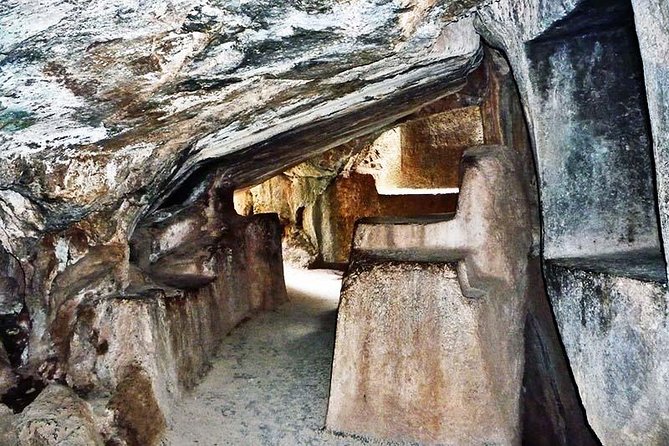
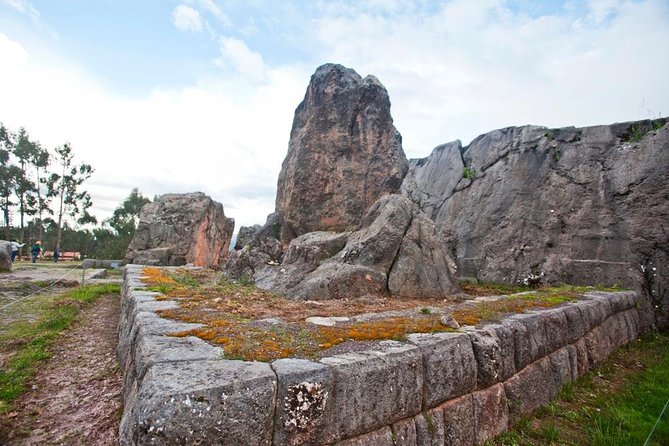
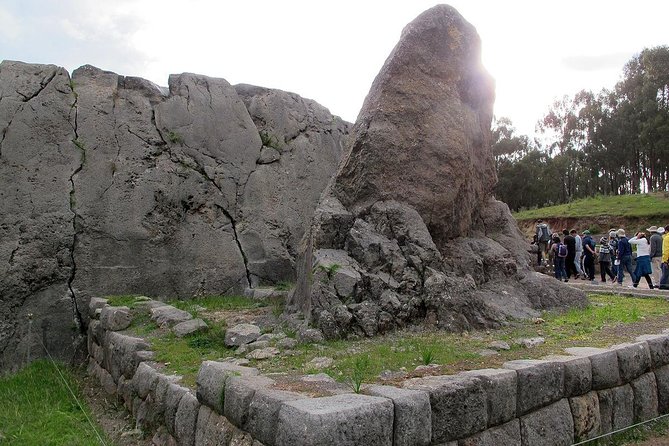
Q’enqo is close to Cusco and feels different from Sacsayhuaman. Instead of massive open walls, you encounter a site carved from a huge natural rock. Its Quechua name refers to a labyrinth or zigzag, linked to a crooked channel cut into the stone.
That channel is the center of the mystery. It carried some kind of liquid, but its exact purpose is not known. Possible explanations include holy water, chicha, or blood. Those possibilities have led researchers to connect Q’enqo with death rituals, body preparation, or ceremonies meant to judge a person’s moral life.
Your guide’s role here is not to pretend every question has a firm answer. The best explanation separates what can be seen from what is still uncertain. You can clearly see the carved channel, natural chambers, and man-made cuts. The original meaning requires careful interpretation.
One chamber contains 19 small niches and is arranged like an amphitheater. The purpose of this space has also been lost, though it is often linked with ceremonies honoring the sun, moon, and stars. Some accounts connect the area with sacrifice, but you should treat that as an interpretation rather than a proven fact.
Q’enqo rewards attention more than speed. The details are smaller and less immediately dramatic than the walls at Sacsayhuaman, so a good explanation makes this stop much stronger. The drawback is that the visit can feel brief if the guide has to keep a large group moving through the carved spaces. Several bookings found the overall tour a little rushed, and Q’enqo is one place where extra time would help.
Puka Pukara: The Inca road in working order
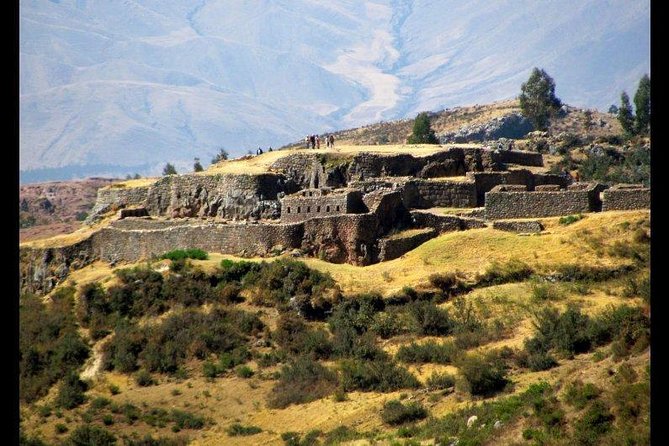
Puka Pukara translates as red fort, a name connected with the reddish earth around the site. The modern use of that name dates from the 20th century, but the ruins themselves show a more practical complex than the title suggests.
Here you can see enclosures, inner squares, canals, aqueducts, baths, and an old road associated with the Qhapaq Ñan, the Inca road network. The stonework is less polished than at Sacsayhuaman, with small and medium stones arranged in irregular walls.
That rougher appearance is part of the lesson. Inca architecture was not always about giant, perfectly fitted blocks. Puka Pukara had three levels marked by walls and terraces, with rooms placed around the natural rock rather than forcing the rock into a rigid plan.
According to accounts from early chroniclers, the site may have served as a barracks and tambo, or resting place, for the Inca’s group when he visited the baths at Tambomachay. Soldiers and dancers may have stayed here. There are also stories of a tunnel connecting Puka Pukara and Tambomachay, though the tunnel remains a rumor rather than a confirmed feature you can visit.
You may find this stop less visually overwhelming than Sacsayhuaman, but it gives the tour useful balance. It helps you think about administration, roads, security, and movement across the empire. The open setting also provides another chance to look across the high country around Cusco.
Plan on roughly an hour, though the actual amount of time depends on the group and the day’s schedule. If you want to study the room layouts and walls closely, six hours may feel generous only on paper.
More Ruins & Archaeology Tours in Cusco
- Cusco: City Tour | Half-Day Tour to 4 Archaeological Sites
★ 4.6 · 206 reviews - Cusco City Sightseeing and Sacsayhuaman Archeological Park Tour
★ 4.5 · 101 reviews - Cusco: Historical Guided City Tour with 4 Inca Ruins
★ 4.5 · 99 reviews - Cusco 4-Hour Private Tour Including Sacsayhuaman and Qenqo
★ 5.0 · 77 reviews
Tambomachay: Water, stone, and a quiet finish
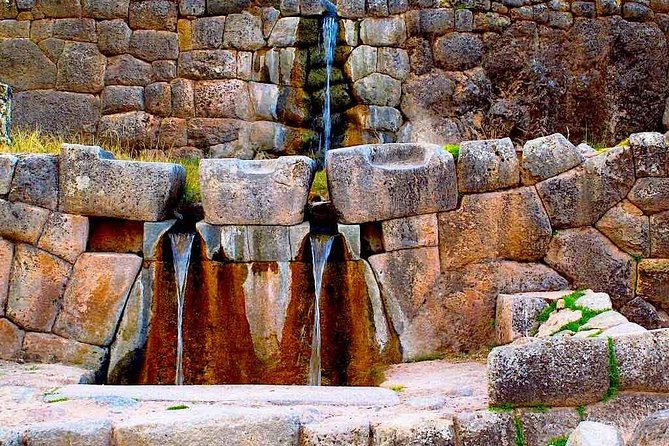
Tambomachay is the smallest-feeling site on the route, but it has a strong sense of place. Located about four miles north of Cusco at roughly 12,150 feet, or 3,700 meters, it is built over a natural spring.
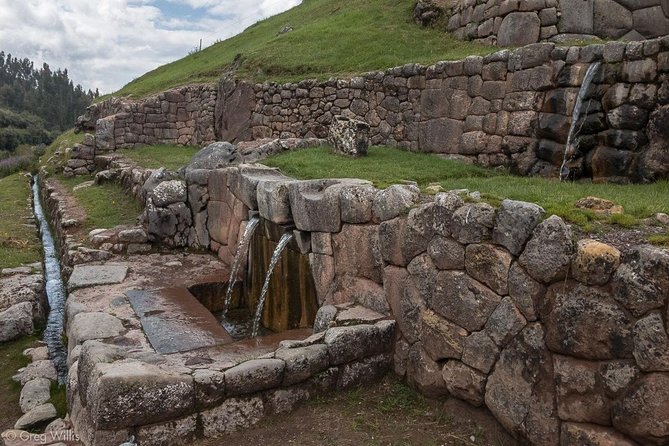
Water feeds a series of small aqueducts, canals, and waterfalls set into three stepped terraces. The stonework is precise, and some retaining walls include trapezoidal niches. The spring still flows through the system, giving the site a calm, living quality that the other ruins do not share.
Tambomachay is also known as El Baño del Inca, the Bath of the Inca. One long-held idea is that it served as a spa for the Inca ruler and perhaps the nobility. Its secluded position and constant water support that theory, though the site may also have had ceremonial or military uses.
The tour allows about 45 minutes here. That is enough to see the water channels, terraces, and stonework, but it is not a long independent exploration. I would listen closely to the explanation, then take a moment to appreciate the sound of the running water before rejoining the group.
This is also the highest stop listed, so altitude can be most noticeable here. If you have not adjusted to Cusco, walk slowly and do not feel embarrassed about taking breaks. The tour is designed for most participants, but participation still requires walking around archaeological sites at high elevation.
What $45 really gets you
At $45 per person, the tour is priced sensibly for a half-day introduction to Cusco’s nearby ruins. Transport is included, as is an English and Spanish-speaking guide. You avoid arranging four separate visits and do not need to negotiate transport between sites.
The value depends on what you want. If you need a clear overview of the four main ruins around Cusco, this is a practical choice. If you want long periods for photography, quiet exploration, or detailed study of each wall, the fixed group schedule may feel too tight.
The archaeological entrance fee is separate and listed as PEN70 per person. Qorikancha has an additional entrance charge of PEN20 per person. Since Qorikancha is not one of the four ruin stops described here, check exactly what your booking includes before you pay. One person specifically wished the entry costs had been explained before purchase, and that is fair advice.
The tour’s rating is 4.8 from 30 ratings, with 97 percent recommending it. That points to a strong overall experience, but the lower scores identify the same weaknesses you should keep in mind: late starts, unclear group arrangements, and less time at the ruins than expected.
The pace, group size, and walking demands
A group of up to 15 is small enough for the guide to speak directly to you, but it is not private. The van may be full, and every stop follows a shared schedule. That tradeoff keeps the price down and makes the tour social, but it reduces your freedom to linger.
Walking is manageable for most people according to the available information, yet altitude changes the equation. Cusco itself is high, and the ruins sit above the city. You may feel breathless on stairs or slopes even if you are normally fit.
I like that the guides have been described as considerate about pace. Still, you should wear shoes suited to uneven archaeological ground and plan your energy carefully. The four stops are not strenuous hikes, but they are not a ride-up-and-look-out-the-window sightseeing trip either.
Because the tour begins at 10 a.m., it leaves the morning available for breakfast and a slow start. It also means the day can extend into the afternoon if the tour runs close to the advertised six hours. Keep later plans flexible, especially if you have tickets for another activity.
Who will get the most from this tour?
I would recommend this outing to you if you want a first look at Inca sites around Cusco and prefer a guide to explain what you are seeing. It suits couples, families, and solo visitors who want shared transport and a moderate price.
It is especially useful early in a Cusco stay. The four sites introduce several sides of Inca life: defense at Sacsayhuaman, ritual questions at Q’enqo, roads and lodging at Puka Pukara, and water engineering at Tambomachay. That range gives you a better base for later visits to places such as Machu Picchu.
Families should note the altitude and stairs. The tour can work well for families because guides have shown patience with different walking speeds, but young children and anyone feeling unwell may find the elevation tiring.
I would think twice if you dislike organized schedules or want to spend half an hour examining one carved stone. The tour moves efficiently from stop to stop, and the experience is strongest when you value context and convenience more than free time.
Should you book the Four Ruins tour?
Yes, if you want good coverage at a reasonable price and can accept a group schedule. Sacsayhuaman supplies the drama, Q’enqo supplies the questions, Puka Pukara explains the empire’s practical side, and Tambomachay finishes with the gentle sound of flowing water.
Book it with three clear expectations: the day may not last the full six hours, the start can run late, and entrance fees are extra. Confirm those costs and keep your afternoon open.
If you do that, this is an effective introduction to Cusco’s Inca sites. The strongest reason to choose it is not simply the number of ruins. It is the way the route shows how stone, religion, roads, water, and power fit together around the old Inca capital.
Free cancellation is available if you cancel at least 24 hours before the start time. Changes or cancellations made later are not refunded.
FAQ
How much does the Cusco Four Ruins tour cost?
The tour costs $45 per person. Entrance to the archaeological sites is not included and is listed as PEN70 per person. Qorikancha has a separate PEN20 entrance charge.
How long does the tour last?
The advertised duration is approximately six hours. The listed visit times are about one hour at Sacsayhuaman, one hour at Q’enqo, one hour at Puka Pukara, and 45 minutes at Tambomachay, plus transport.
What time does the tour start?
The scheduled start time is 10 a.m.
Where does the tour begin?
The meeting point is Heidi Travel EIRL at C. Plateros 324, Cusco 08000, Peru.
Where does the tour end?
The activity ends back at the same meeting point.
Is transportation included?
Yes. Transport and a bilingual English and Spanish-speaking guide are included.
How large is the group?
The tour has a maximum of 15 participants.
Can I cancel for a full refund?
Yes, if you cancel at least 24 hours before the experience start time. Cancellations or changes made less than 24 hours before the start are not accepted for a refund.
More Ruins and Archaeology near Cusco
- Cusco: Half-Day City Tour with Sacsayhuaman and Qenqo
★ 4.5 · 77 reviews - Sacsayhuaman Temple, Tambomachay and Puca Pucara Half-Day Tour
★ 4.5 · 59 reviews - Private Cusco City Tour with Sacsayhuaman & Inca Sites
★ 5.0 · 52 reviews - Private Ollantaytambo, Pisac Ruins Tour with Farm Visit, Gourmet Picnic Lunch
★ 5.0 · 52 reviews
Added recently around Cusco
- Guided tour of the mountain of colors in Cusco★ 5.0 · 11 reviews
- 2-Day Private Short Inca Trail to Machu Picchu★ 5.0 · 15 reviews
- City Tour Cusco – Group★ 5.0 · 4 reviews
- Tour Sacred Valley with Maras and Moray★ 5.0 · 15 reviews
- San Pedro Market Tour with Peruvian Cooking Class★ 5.0 · 31 reviews
- Walking Culinary Experience★ 5.0 · 41 reviews
- City Tour in Cusco★ 4.5 · 10 reviews
- Rainbow Mountain Small-Group Full-Day Hike from Cusco with Meals★ 4.5 · 15 reviews
Inca Ruins & Archaeological Sites, compared.
Half-Day City Tour with Sacsayhuaman and Q’enco
Read our review →
City Tour Cusco Qoricancha Sacsayhuaman y Tambomachay
Read our review →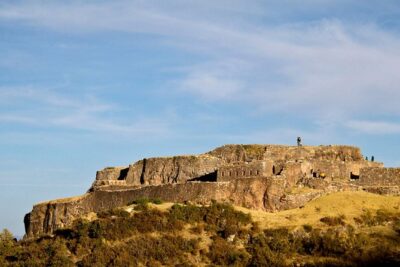
Pachacamac Ruins & Barranco Half-Day Guided Tour
Read our review →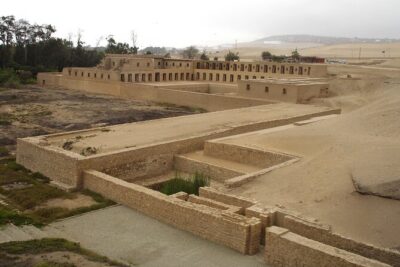
Pre Inca Temple of Pachacamac Half-Day Tour from Lima
Read our review →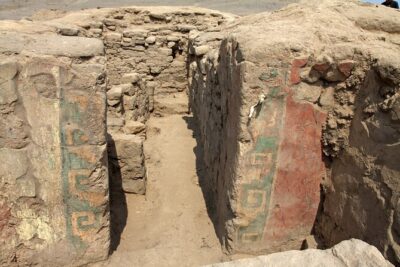
Tour to the Archaeological Sanctuary of Pachacamac (small group)
Read our review →
From Pyramids & Bohemian Streets: Lima Miraflores & Barranco Tour
Read our review →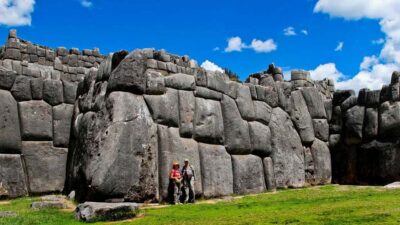
City Tour | Half-Day Tour to 4 Archaeological Sites
Read our review →Browse the lists this tour appears in