
Reviewed · INCA RUINS & ARCHAEOLOGICAL SITES
Qorikancha and Four Ruins Cuckoo City Tour
Cusco’s best first day is built from stone. This half-day outing links Qorikancha with four major Inca sites, giving you sacred temples, huge masonry, water channels, mountain views, and a useful introduction to Cusco. I like the broad mix of places, and I also like the low price of $21.50 per person. The main drawback is that the PEN70 archaeological-site ticket costs extra, and the group may include as many as 50 people.
I also like the easy central pickup, English and Spanish guiding, and the chance to see alpacas, vicuñas, and Peruvian textiles at the community center. The five-and-a-half-hour schedule is efficient, but each archaeological stop is fairly short, so you should choose this tour for a strong overview rather than a slow, detailed visit to every site.
In This Review
- Key points to know before booking
- Why this five-and-a-half-hour route works in Cusco
- Qorikancha: where Inca stonework meets colonial Cusco
- Sacsayhuaman: massive blocks and open ceremonial space
- Q’enqo: a compact site with several possible uses
- Puka Pukara: a red fortress on the route out of Cusco
- Tambomachay: water, rest, and the final ruin
- Manos de la Comunidad: a 40-minute stop with alpacas and textiles
- What the $21.50 price really includes
- Timing, pickup, and group size
- What the strongest praise tells you
- Who should book this Cusco tour?
- Should you book the Qorikancha and Four Ruins tour?
- FAQ
- How much does the tour cost?
- How long does the tour last?
- Which places does the tour visit?
- Is archaeological admission included?
- Is hotel pickup available?
- What languages does the guide speak?
- What is the maximum group size?
- Can I cancel for a full refund?
Key points to know before booking
- Qorikancha begins the tour with sacred Inca stonework and the remains of the Temple of the Sun.
- Sacsayhuaman delivers the biggest visual impact, with limestone blocks weighing up to 130 tons.
- Q’enqo, Puka Pukara, and Tambomachay add smaller but important religious, defensive, and water-related sites.
- The PEN70 archaeological ticket is not included, so add that cost to the advertised price.
- Manos de la Comunidad adds a 40-minute textile and camelid visit at no extra charge.
- The tour is recommended by all 14 recorded reviewers, with repeated praise for scenery, organization, friendly service, and family appeal.
Why this five-and-a-half-hour route works in Cusco
Cusco can feel like a puzzle at first. Streets rise sharply, Inca walls appear beneath Spanish buildings, and the main ruins sit outside the center. This route gives you a practical first look at the city and its surrounding ceremonial sites without requiring you to arrange several separate rides.
The itinerary lasts about five hours and 30 minutes. That is long enough to cover six stops, but not long enough for every place to receive a leisurely examination. You will spend about 40 minutes at Qorikancha, 40 minutes at Sacsayhuaman, 30 minutes at Q’enqo, 25 minutes at Puka Pukara, 35 minutes at Tambomachay, and 40 minutes at the textile center.
I see this as a good orientation tour. You get the major names, a guide who can answer questions, and transportation between sites. It also suits families and groups of friends, which fits the positive comments about having fun together, taking photographs, and returning with pleasant memories.
The maximum group size is 50. That can keep the price low, but it may also mean waiting for people to gather and standing farther from the guide. If you want quiet pacing or lots of time at each stone wall, a private tour would likely suit you better, though this option costs much less.
More City Tours in Cusco
- Cusco: Half-Day City Tour with Sacsayhuaman and Q’enco
★ 4.6 · 1,129 reviews - City Tour Cusco Qoricancha Sacsayhuaman y Tambomachay
★ 4.7 · 617 reviews - Cusco City Tour Four Ruins in Half-Day
★ 5.0 · 530 reviews
Qorikancha: where Inca stonework meets colonial Cusco
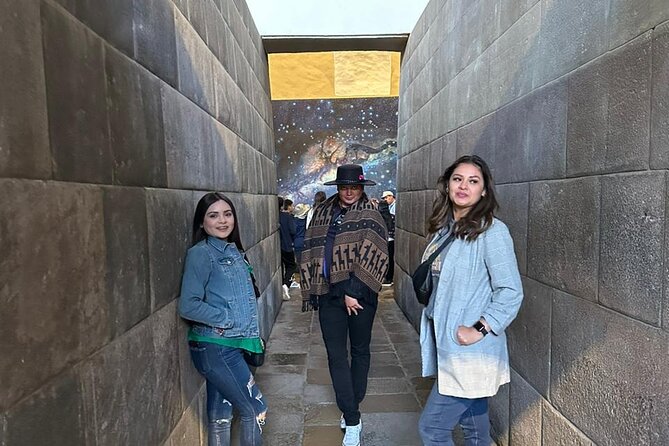
Qorikancha, also written Qoricancha, means the Temple of the Sun. It was an important indigenous shrine dedicated not only to the Sun but also to the Moon, Stars, Rainbow, Thunder, and Lightning. The site gives you a direct introduction to the religious world of the Inca.
The most striking feature is the masonry. The stones were cut with great precision, and the joints are so tight that a sheet of paper could not fit between them. The walls have also remained stable through earthquakes, a detail that helps you understand why Inca construction remains one of Cusco’s great attractions.
The chronicles describe entry to this sacred enclosure as requiring fasting and bare feet. Your visit is not presented as a reenactment of that practice, but the detail gives the place a serious tone. This was not simply a government building. It was a religious center tied to several important forces in the Andean world.
You have about 40 minutes here. That is enough for an introduction and photographs, especially with a guide explaining what you are looking at. It is not enough to inspect every corner in depth, so pay attention to the construction details rather than trying to rush through the whole site.
Admission is not included. The separate archaeological-site charge is PEN70 per person and covers the sites on this route. Keep that in mind when comparing the $21.50 tour price with other Cusco excursions.
Sacsayhuaman: massive blocks and open ceremonial space
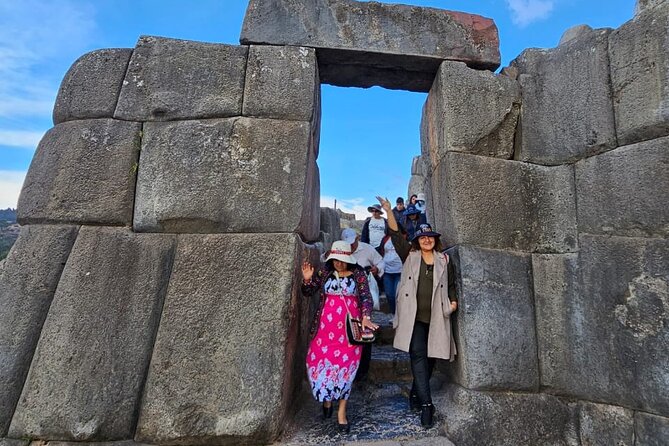
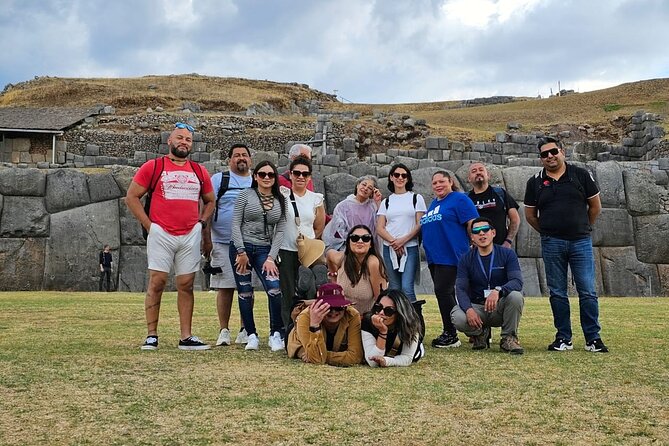
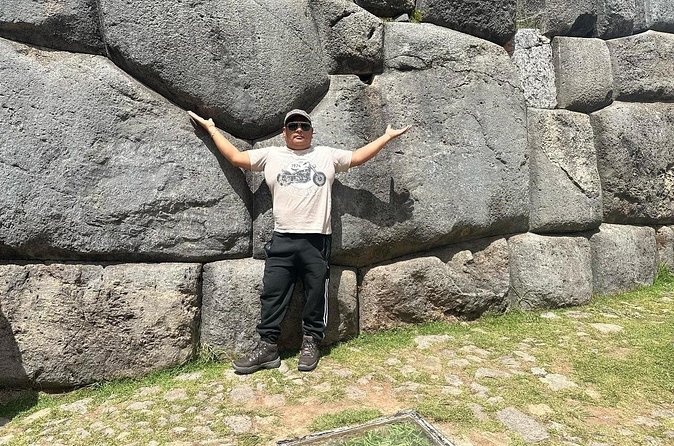
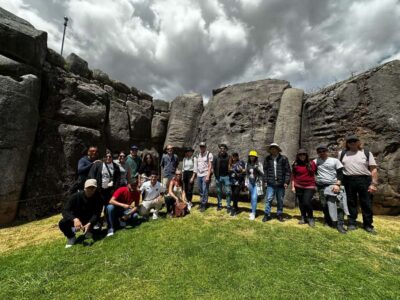
Sacsayhuaman is the stop most likely to make you pause. Its limestone blocks are enormous, with some weighing between 25 and 130 tons. The scale is hard to grasp from photographs, and the three zigzag terraces give the site a strong visual shape.
The terraces curve in a meandering pattern rather than running in straight lines. This design created a large open area used for gatherings and celebrations, including Warachikuy and Inti Raymi. Your guide can help connect the stones to the public ceremonies that once took place here.
You get about 40 minutes at Sacsayhuaman. Use that time for the views over Cusco and for close looks at the wall construction. The scenery received some of the strongest praise in the available comments, especially for photographs with friends and family.
The site is spacious, but the schedule remains fixed. If you enjoy standing quietly beside huge walls and thinking about how they were shaped and moved, you may wish for more time. Still, for a first visit, this stop gives you the clearest sense of Inca engineering and public life.
Q’enqo: a compact site with several possible uses
Q’enqo lies about one kilometer from Sacsayhuaman. Its name means labyrinth, and the site is known for limestone sculpture spread across roughly 500 meters. Compared with Qorikancha and Sacsayhuaman, it feels smaller and more contained.
The stones and structures have been linked by historians to astronomy, religious activity, embalming, and mummification. Those possible uses make the guide’s explanation especially useful. Without context, Q’enqo can appear to be a collection of carved rocks. With context, you begin to see how the Inca used stone spaces for ritual and study.
The stop lasts about 30 minutes. That is a reasonable amount of time for a compact archaeological visit, though you will need to stay aware of the group’s pace. I would listen closely here, since the meaning of the site is less obvious than the giant walls at Sacsayhuaman.
More Ruins & Archaeology Tours in Cusco
- Cusco: City Tour | Half-Day Tour to 4 Archaeological Sites
★ 4.6 · 206 reviews - Cusco City Sightseeing and Sacsayhuaman Archeological Park Tour
★ 4.5 · 101 reviews - Cusco: Historical Guided City Tour with 4 Inca Ruins
★ 4.5 · 99 reviews - Cusco: Half-Day City Tour with Sacsayhuaman and Qenqo
★ 4.5 · 77 reviews
Puka Pukara: a red fortress on the route out of Cusco
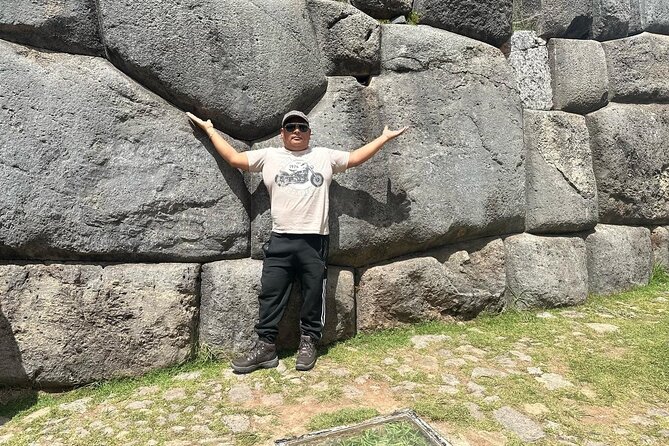
Puka Pukara translates from Quechua as red fortress. It served as a strategic point for controlling movement into and out of the imperial city. The site also functioned as a territorial boundary, helping divide regions and regulate passage.
You spend about 25 minutes here, making it the shortest archaeological stop. That is enough for a quick explanation and a look at the setting, but it leaves little room for lingering. I would treat Puka Pukara as part of the wider Inca road and control system rather than as a standalone attraction.
Its position also adds variety to the tour. After the religious focus of Qorikancha and Q’enqo, and the monumental walls of Sacsayhuaman, Puka Pukara shows a more practical side of Inca planning. It reminds you that movement, borders, and supervision mattered in the imperial city.
Tambomachay: water, rest, and the final ruin
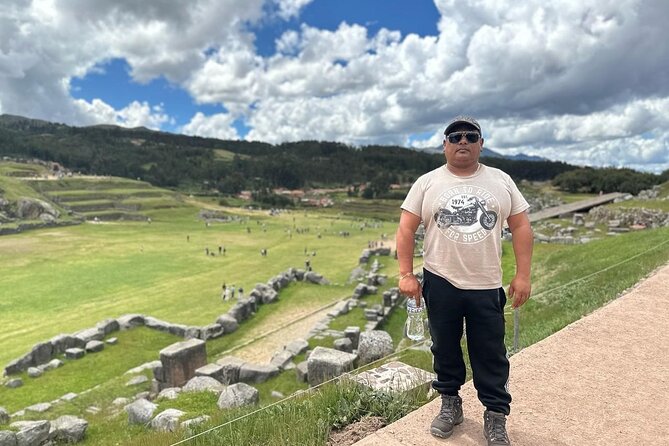
Tambomachay is about nine kilometers from Cusco and is best known for its fountains and steady flow of water. It is often called the Inca baths or the waters of eternal youth. The tour allows about 35 minutes here.
The site offers a quieter change of mood after the large walls and open terraces. Water gives Tambomachay its identity, and the constant flow is the detail to watch for. The description of the place as a resting site also helps you picture how it may have served people moving through the area.
This is the final archaeological stop before returning toward the city. You end the city tour in the Plaza de Armas, according to the route description, while the meeting information also identifies C. Espinar 208 as the start and end point. Confirm the exact drop-off arrangement when you book, since the published details mention both the Plaza de Armas and the meeting point.
Manos de la Comunidad: a 40-minute stop with alpacas and textiles
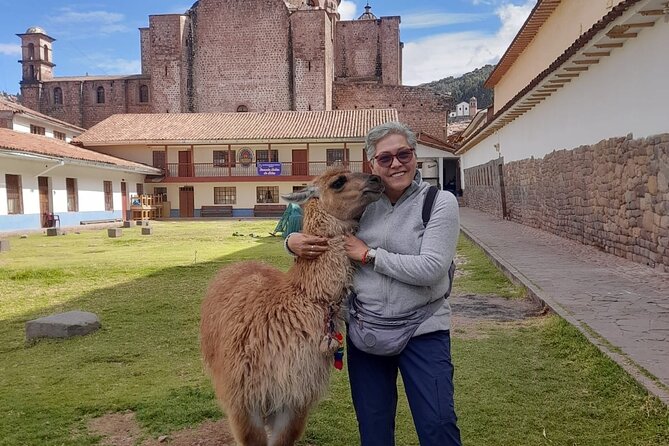
The textile center is not an archaeological site, and that is part of its appeal. After several stone ruins, you get a look at South American camelids and Peruvian textile traditions.
You can see a variety of camelids, including alpacas and vicuñas, along with Inca textiles and replica tapestries made by Peruvian artists. The center also presents garments made from baby alpaca and vicuña fiber. The entry is included, so this 40-minute visit adds variety without another ticket charge.
I would approach this stop as a cultural presentation and shopping opportunity rather than a museum visit on the scale of Qorikancha. The information provided does not promise a large collection or a particular demonstration. Still, it is useful if you want to understand the materials behind Peru’s well-known clothing and woven goods.
The stop can also be a practical break in the day. Families may appreciate the camelids, while people interested in textiles get a chance to compare contemporary garments with older design traditions. If you do not want time devoted to merchandise or textile displays, this is the part of the tour you may find less essential.
What the $21.50 price really includes
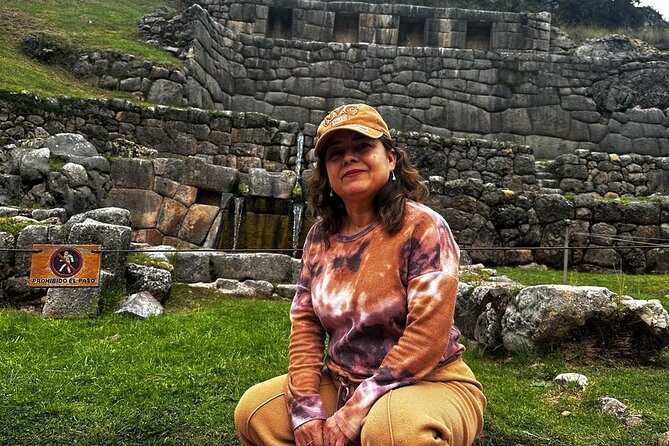
At $21.50 per person, the tour offers good value if you want transportation, a professional guide, and a broad route through Cusco’s main nearby ruins. The price includes pickup and transfer in central Cusco, tourist transportation, guiding in English or Spanish, and entry to Manos de la Comunidad.
The key extra cost is the PEN70 archaeological-site ticket per person. Food and tips are also separate. Once you add the site admission, the outing costs more than the headline price suggests, but it still combines five archaeological locations with transport and guiding in one half-day.
I would compare the total cost with the convenience you receive. Arranging separate transportation to Sacsayhuaman, Q’enqo, Puka Pukara, and Tambomachay could take time and require several fares. This tour removes that planning work and gives you a fixed route.
The value is strongest for a first visit. You see the major sites, learn the basic differences between a temple, ceremonial terrace, labyrinth, fortress, and water sanctuary, then return to central Cusco. If you already know these ruins well, the short stop times and large possible group may feel less appealing.
Timing, pickup, and group size
The meeting point is C. Espinar 208 in Cusco, postal code 08002. Hotel pickup and transfer are included in central Cusco, so you should check that your lodging falls within the stated central pickup area.
The activity is near public transportation, and confirmation arrives at booking. Most people can participate, according to the supplied information, though no detailed mobility guidance is provided for the individual ruins. You should ask the provider directly if you need specific information about walking surfaces or access.
The tour is commonly booked about 46 days in advance. That suggests you should reserve early if your Cusco dates are fixed, especially if you want a particular day. The 50-person maximum is worth noting. A group of that size can be less personal, and you may need to stay close to hear the guide.
The overall schedule is fairly active. You move from one site to another, listen to several explanations, take photographs, and spend 40 minutes at the textile center. I would bring water, wear comfortable shoes, and leave room in your day for the altitude and Cusco’s uphill streets, although the supplied details do not specify a packing list or elevation guidance.
What the strongest praise tells you
The available ratings show a five-star average from 14 reviews, with 100 percent recommending the experience. The repeated praise is quite consistent: beautiful scenery, friendly and warm people, good organization, comfortable routes, useful explanations, and a pleasant experience with family or friends.
One especially useful point is the guide’s role. The tour is described as interesting and dynamic, with explanations that addressed questions and helped people learn. No guide names are provided, so you cannot request a particular person based on the available information.
The comments also repeatedly return to the views and photographs. That matters because this route is not only about facts. You get open settings around the ruins and several chances to photograph Cusco, the stonework, and the surrounding scenery.
The praise is enthusiastic, but the sample is small. Fourteen reviews can show a clear pattern, yet they cannot guarantee the same guide, group chemistry, or traffic conditions on every departure. I would use the feedback as a sign that the tour generally delivers a pleasant introduction, not as proof that every detail will be perfect.
Who should book this Cusco tour?
I would recommend it to first-time visitors who want the main ruins explained in one organized outing. Families and groups of friends are a particularly good fit, since the route mixes big views, impressive stonework, cultural displays, and manageable stops.
It also suits you if you want a lower-cost introduction before deciding where to return for longer. Sacsayhuaman may become your priority after this tour, or you may decide that Qorikancha deserves a separate visit.
I would hesitate if you dislike group tours, want a specialist archaeology guide, or prefer to set your own pace. The possible 50-person group and fixed stop lengths limit personal attention. You should also budget for the PEN70 site ticket rather than treating $21.50 as the entire cost.
Free cancellation is available if you cancel at least 24 hours before the start time. Cancellations or changes made less than 24 hours before departure are not accepted for a refund, and the cut-off uses Cusco local time.
Should you book the Qorikancha and Four Ruins tour?
Book this tour if you want strong first-day coverage of Cusco at a modest price. The route gives you sacred Inca architecture, monumental walls, a ritual site, a fortress, water fountains, camelids, and textiles in about five and a half hours.
Skip it if your main goal is slow photography, private guiding, or detailed archaeological study. For most first-time visitors, though, the combination of transportation, English or Spanish guiding, central pickup, and five major sites makes this a sensible way to get your bearings in Cusco.
FAQ
How much does the tour cost?
The listed price is $21.50 per person. The PEN70 archaeological-site admission is extra, and food and tips are not included.
How long does the tour last?
The experience lasts approximately five hours and 30 minutes.
Which places does the tour visit?
The route visits Qorikancha, Sacsayhuaman, Q’enqo, Puka Pukara, Tambomachay, and Manos de la Comunidad Textile Center.
Is archaeological admission included?
No. Access to the archaeological sites costs PEN70. The textile center entry is included.
Is hotel pickup available?
Hotel pickup and transfer are included in central Cusco. The stated meeting point is C. Espinar 208, Cusco 08002, Peru.
What languages does the guide speak?
The professional tourism guide provides service in Spanish and English.
What is the maximum group size?
The tour can have a maximum of 50 participants.
Can I cancel for a full refund?
Yes, if you cancel at least 24 hours before the experience start time. Cancellations or changes made less than 24 hours before the start time are not accepted for a refund.
More Ruins and Archaeology near Cusco
- Cusco 4-Hour Private Tour Including Sacsayhuaman and Qenqo
★ 5.0 · 77 reviews - Half-Day City Tour of Cusco Including Tambomachay
★ 4.5 · 59 reviews - Sacsayhuaman Temple, Tambomachay and Puca Pucara Half-Day Tour
★ 4.5 · 59 reviews - Private Cusco City Tour with Sacsayhuaman & Inca Sites
★ 5.0 · 52 reviews
Added recently around Cusco
- Super valley or vip valley★ 5.0 · 13 reviews
- the Incas’ Sacred Valley★ 5.0 · 27 reviews
- Sacred Valley of the Incas Day Trip from Cusco★ 5.0 · 6 reviews
- Small-Group Tour: Rainbow Mountains Hiking from Cusco★ 4.0 · 5 reviews
- Excursion to the Sacred Valley of the Incas from Cusco★ 5.0 · 8 reviews
- Maras + Moray & Textile Experience★ 5.0 · 14 reviews
- Tour EN Cuatrimoto POR la Montaña 7 Colors Hike 5 Minutes★ 4.5 · 32 reviews
- rainbow mountain★ 4.0 · 4 reviews
Inca Ruins & Archaeological Sites, compared.
Half-Day City Tour with Sacsayhuaman and Q’enco
Read our review →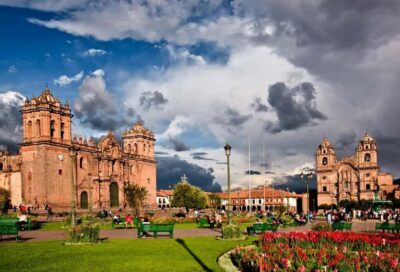
City Tour Cusco Qoricancha Sacsayhuaman y Tambomachay
Read our review →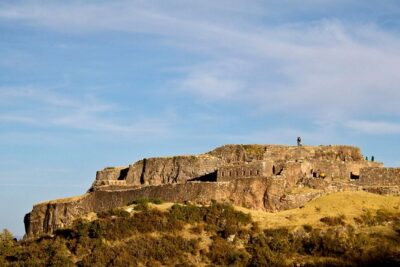
Pachacamac Ruins & Barranco Half-Day Guided Tour
Read our review →
Pre Inca Temple of Pachacamac Half-Day Tour from Lima
Read our review →
Tour to the Archaeological Sanctuary of Pachacamac (small group)
Read our review →
From Pyramids & Bohemian Streets: Lima Miraflores & Barranco Tour
Read our review →
City Tour | Half-Day Tour to 4 Archaeological Sites
Read our review →Browse the lists this tour appears in