
Reviewed · HISTORICAL TOURS
Walking Tour in Legendary & Historical Cusco City
Cusco rewards a good first walk. This two-and-a-half-hour English tour gives you a useful introduction to Peru’s former Inca capital, with stops at markets, old neighborhoods, historic sites, viewpoints, and a colonial-era aqueduct. I like the focus on Inca foundations beneath Spanish buildings and the chance to see more than the main square. I also like the small maximum group of 16, which should make questions easier than on a large city tour.
The main consideration is the altitude and uneven nature of Cusco itself. You will be walking through a mountain city, and the tour may feel more demanding than its modest length suggests. The advertised price is $30.20 per person, a fair amount if your guide adds strong context, but less appealing if you want a quick orientation with little walking.
In This Review
- Key Points Before You Book
- Why a Walking Tour Works So Well in Cusco
- Starting Near Plaza de Armas
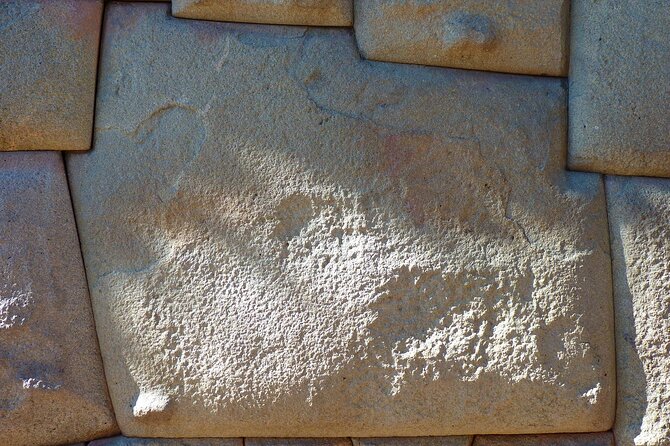
- Inca Foundations Beneath Colonial Walls
- Markets and Everyday Cusco
- Neighborhoods, Views, and the Feel of the City
- The Colonial-Era Aqueduct
- A Guide Who Shapes the Experience
- Is $30.20 a Fair Price?
- Practical Details for a Better Walk
- Who Should Book This Cusco Walk?
- Should You Book It?
- FAQ
- How long does the walking tour last?
- What language is the tour offered in?
- Where does the tour start and finish?
- What places are included during the walk?
- How many people can join the tour?
- Can I cancel for a full refund?
Key Points Before You Book
- See Cusco’s layered past: Colonial buildings sit over Inca temples and palaces, making the city itself the main exhibit.
- Visit more than Plaza de Armas: The route includes markets, historic locations, distinctive neighborhoods, viewpoints, and a colonial aqueduct.
- English-speaking guidance: The tour is designed to help you understand Cusco’s history and culture, not simply photograph its buildings.
- Small group size: The maximum is 16 people, a useful limit for a walking tour in narrow streets.
- A guide who may go the extra mile: Daniel received especially strong praise for answering detailed questions and extending the walk by two hours because of his enthusiasm for Cusco.
- Easy central finish: You begin at Happy Gringo Tours near Plaza de Armas and finish on the main square.
Why a Walking Tour Works So Well in Cusco
Cusco is not a city you understand from a bus window. Its story is written into doorways, foundations, stones, plazas, and street plans. A walking tour lets you see the odd but fascinating collision of Inca engineering and Spanish colonial design at close range.
The city was the capital of the Inca Empire and is described as the oldest constantly inhabited city in the Americas. That long continuity is the heart of the experience. You are not simply looking at old ruins outside town. You are walking through a living city where later buildings were placed on top of earlier temples and palaces.
I find that this kind of tour is most useful early in a Cusco visit. You get a broad map in your head, then later visits to museums, churches, markets, or nearby archaeological sites make more sense. A guide can also point out details you might otherwise pass without noticing.
The route is centered in Cusco’s historic district. That makes the tour practical if you are staying near the main square or arriving in the center by public transportation. It also means you should not expect a full-day excursion into the surrounding mountains. This is a city walk, not a Machu Picchu trip or a broader Sacred Valley outing.
More City Tours in Cusco
- Cusco: Half-Day City Tour with Sacsayhuaman and Q’enco
★ 4.6 · 1,129 reviews - City Tour Cusco Qoricancha Sacsayhuaman y Tambomachay
★ 4.7 · 617 reviews - Cusco City Tour Four Ruins in Half-Day
★ 5.0 · 530 reviews
Starting Near Plaza de Armas
The tour begins at Happy Gringo Tours, at Plaza de Armas 08002 in Cusco. The ending point is also Plaza de Armas, Cusco 08000. In practical terms, you start near the city’s main square and return there, which makes it easy to continue sightseeing, find lunch, or walk back to your accommodation.
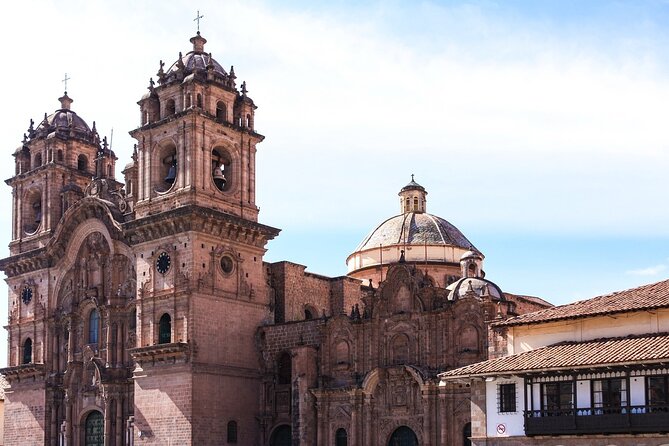
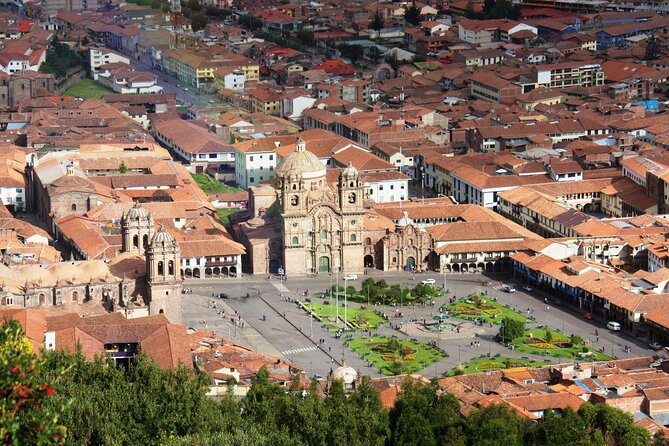
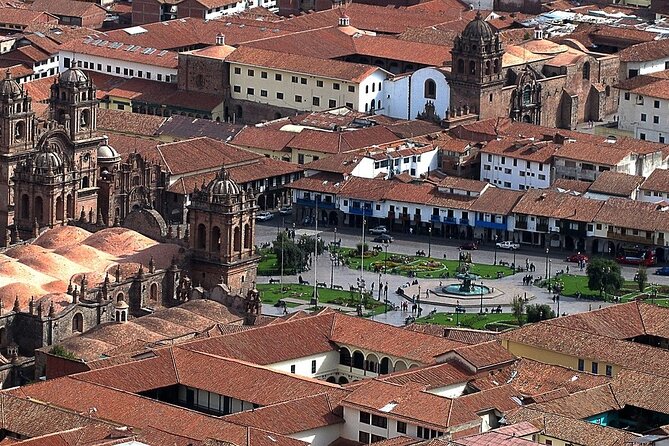
Plaza de Armas is an effective place to begin because it gives you an immediate sense of Cusco’s mixed identity. Spanish colonial architecture frames a square at the center of a city built on Inca foundations. From here, the guide can connect what you see in front of you with the larger story of imperial power, conquest, religion, and daily life.
You should arrive ready to walk rather than treating the meeting point as a brief photo stop. The tour lasts approximately two hours and 30 minutes, while the listed route description gives two hours for the main city visit. That small difference may reflect the pace, introductions, or time spent answering questions. I would keep a little flexibility in your schedule instead of booking a tight appointment immediately afterward.
Inca Foundations Beneath Colonial Walls
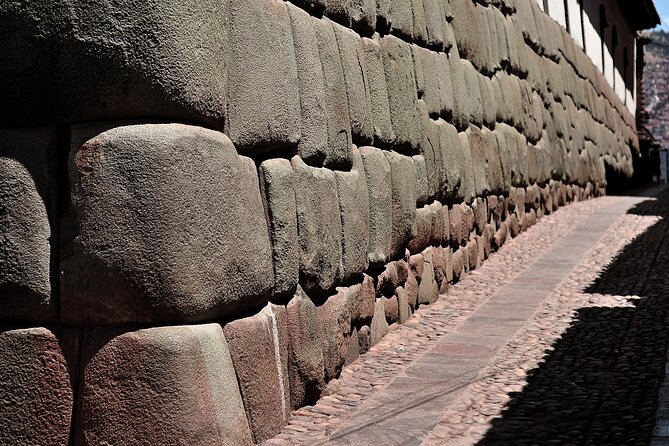
The most important idea on this tour is the way Cusco’s buildings overlap in time. Colonial structures were built over Inca temples and palaces, so the city presents two layers at once. You may be looking at a Spanish-era facade while standing beside stonework connected to the Inca city beneath it.
That contrast gives the walk real value. A guide can explain why a wall matters, how the city changed, and what the surviving architecture tells you about Cusco’s past. Without that help, it is easy to see only attractive streets and stone buildings without understanding their place in the city’s development.
The tour promises historic sites and unique neighborhoods rather than a single major monument. That is a strength if you want a broad introduction. You will get a sense of how the historic center fits together, instead of spending the whole outing at one attraction.
The tradeoff is that the precise stops are not laid out in detail. You should expect the route to vary with the guide, street conditions, and the group’s pace. If you need a fixed list of named monuments or guaranteed interior admissions, this may not be the right format. Admission tickets are not required for the walking tour itself, but the experience is mainly about seeing and interpreting the city from its streets.
Markets and Everyday Cusco
Markets are among the most useful stops on a city walk because they show ordinary life alongside the grand historical narrative. Here, the market visit adds local texture to the tour. You are not only hearing about the Inca Empire or colonial architecture. You are also seeing places connected to how people shop, eat, and move through the city today.
I like this balance. Cusco can sometimes feel like a collection of monuments for sightseeing, but markets bring you back to the present. They also give your guide a chance to explain local customs and the relationship between the city and the wider region, although the exact subjects covered will depend on the guide.
Keep your expectations sensible. The tour description does not promise a food tasting, shopping credit, or a market meal. Treat the market as a place to observe and ask questions. If you want to buy something, any purchases would be your responsibility.
This is also a good reason to choose the English-language option if you want background during the walk. The guide is included, and the point is to gain a wider view of Peruvian history and culture rather than simply follow a route from one photo stop to another.
More Historical Tours in Cusco
- Cusco: Historic Walking Tour with Pisco Sour and Local Music
★ 5.0 · 190 reviews - Cusco: Historical Guided City Tour with 4 Inca Ruins
★ 4.5 · 99 reviews - Cusco Highlights Walking Tour: History, Culture, Traditions
★ 4.9 · 72 reviews - Cusco: Historic Walking Tour with Pisco Sour and Music Show
★ 4.6 · 65 reviews
Neighborhoods, Views, and the Feel of the City
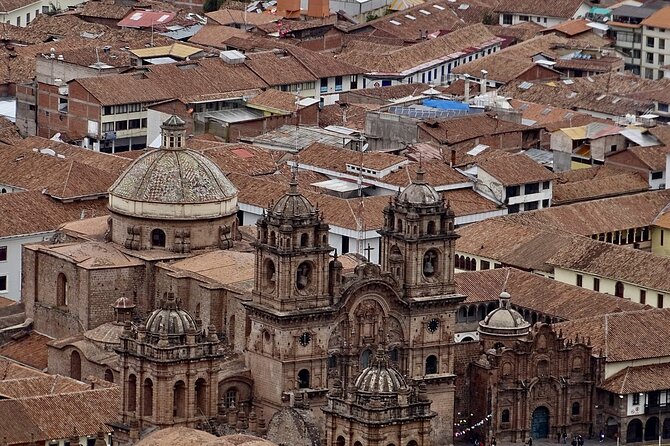
The route includes distinctive neighborhoods and viewpoints, which should add variety to the central streets. A viewpoint can help you understand Cusco’s setting among the mountains, while a neighborhood walk shows how the city extends beyond its most polished public square.
One particularly strong account of the experience credits Daniel with taking the group to Cusco’s best viewpoints. He was also praised for answering detailed questions and continuing for two additional hours because he wanted to show more of his city. That is a striking sign of personal enthusiasm, though you should not assume every departure will run that long. The official duration remains approximately two and a half hours.
The views are valuable because Cusco’s setting is part of its identity. The city is not an isolated historic center on flat ground. Its mountain scenery helps explain its character and its strategic importance. From higher points, you can also see how the old center relates to the surrounding city.
At the same time, viewpoints require walking uphill in at least some city routes. The supplied information says most people can participate, but it does not promise a flat or step-free route. If you are concerned about steep streets or altitude, pace yourself and ask about the route at the start.
The Colonial-Era Aqueduct
The colonial-era aqueduct is one of the tour’s more unusual details. It is easy for a city walk to focus only on famous churches, squares, and grand facades. An aqueduct shifts attention toward the systems that helped a growing city function.
That kind of stop can make the past feel practical. Water infrastructure tells you about settlement, engineering, public needs, and the changes brought during the colonial period. It may not be the most famous sight on the route, but it gives the walk a useful sense of scale.
You should think of this as a street-level visit rather than a formal attraction with a separate ticket and long indoor presentation. The aqueduct is part of the walking route, and the guide’s explanation is what turns it from an incidental structure into a meaningful stop.
A Guide Who Shapes the Experience
The guide is the tour’s most important variable. The itinerary covers broad subjects, including history, architecture, markets, neighborhoods, and views. A strong guide can connect those pieces into one clear story. A weak one could simply lead you around the center and name a few buildings.
Daniel is the guide specifically praised for being able to answer detailed questions and for extending the walk well beyond the planned time. That suggests this experience can work particularly well for curious people who want conversation rather than a memorized speech. If you enjoy asking why a building was placed where it is, how Inca and colonial construction differ, or how Cusco changed over time, this format may suit you.
The maximum group size of 16 is another positive. It is not a private tour, but it is small enough that you should have a reasonable chance to hear the guide and ask something without holding up a crowd. A smaller group also helps on narrow streets and makes it easier to keep together.
The limitation is that the tour is offered in English only. If you need another language, this experience will not meet that need. The listing also does not promise a private departure, so you should expect to share the walk with other people.
Is $30.20 a Fair Price?
At $30.20 per person, the price is reasonable if you use the tour as a proper introduction to Cusco. You are paying for an English-speaking guide, a route through the historic center, and interpretation of several different parts of the city. There are no listed admission charges, so the value depends mainly on the guide’s time and the quality of the explanations.
I would compare the price with what you want from the walk. If you are new to Cusco and plan to explore the center afterward, the tour can save you from wandering without context. It can also help you decide which places deserve a second visit.
If you already know Cusco well, or if you prefer to explore at your own pace, $30.20 may feel less attractive. The route is not presented as an in-depth archaeology tour, and no museum or monument admissions are included. You are buying orientation, stories, and access to a guide’s local perspective.
The strongest value appears when the guide is as engaged as Daniel was described to be. His willingness to answer detailed questions and add two hours would make the price feel very good. Still, the official outing is approximately two and a half hours, so plan your budget and schedule around that rather than an unexpected extension.
A separate gratuity is not included. Set aside some extra money for that listed cost if you feel the guide has earned it.
Practical Details for a Better Walk
You receive booking confirmation at the time of purchase, and the experience is offered with a mobile ticket. The meeting point is near public transportation, and the beginning and end are both in the Plaza de Armas area.
Because this is Cusco, practical preparation matters. Wear shoes suited to a city walk, keep water with you, and avoid filling your schedule with an immediate commitment afterward. The route may include uphill streets, viewpoints, and uneven historic surfaces, even though most people can participate.
The tour is often booked about 10 days in advance. That does not guarantee that every departure sells out, but it is a useful planning signal. If your Cusco dates are fixed, booking ahead is sensible.
Free cancellation is available when you cancel at least 24 hours before the start time. Cancellations or changes made less than 24 hours ahead are not accepted for a refund, and the cut-off uses local time.
Who Should Book This Cusco Walk?
I would choose this tour if you want your first look at Cusco to include both famous central sights and less obvious details. It is especially suitable for:
- First-time visitors who want a clear introduction to the city
- People interested in Inca and colonial architecture
- Travelers who enjoy asking questions during a guided walk
- Couples, solo visitors, or small groups who prefer a maximum of 16 participants
- Anyone who wants markets, neighborhoods, views, and infrastructure alongside major historic sites
I would be more cautious if you want a private tour, a completely fixed list of monuments, indoor admissions, or a route with no hills. You should also consider the English-only format and the physical demands of walking in Cusco.
Should You Book It?
Yes, if you want a friendly, history-focused orientation to central Cusco at a moderate price. The combination of Inca foundations, colonial buildings, markets, neighborhoods, viewpoints, and the aqueduct gives you more range than a simple Plaza de Armas stroll.
The best reason to book is the possibility of getting a guide with Daniel’s level of enthusiasm. His ability to handle detailed questions and continue well beyond the planned time suggests the walk can become a real conversation about Cusco, not just a checklist of sights.
Book it early if your dates are fixed, arrive prepared for hills, and leave room in your schedule in case the guide gets carried away showing you the city. If you want a quick, strictly timed introduction, choose another option. If you want to understand why Cusco looks the way it does, this is a sound first step.
FAQ
How long does the walking tour last?
The tour lasts approximately two hours and 30 minutes. The main city visit is also described as taking two hours, so you should allow some flexibility around the advertised duration.
What language is the tour offered in?
The tour is offered in English and includes an English-speaking guide.
Where does the tour start and finish?
It starts at Happy Gringo Tours near Plaza de Armas in Cusco. It finishes on the main square, Plaza de Armas.
What places are included during the walk?
The route includes Cusco’s historic center, markets, historic sites, unique neighborhoods, viewpoints, and a colonial-era aqueduct. It also highlights colonial buildings built over Inca temples and palaces.
How many people can join the tour?
The maximum group size is 16 people.
Can I cancel for a full refund?
Yes. You can receive a full refund if you cancel at least 24 hours before the experience start time. Cancellations and changes made less than 24 hours before the start time are not accepted for a refund.
More History to Walk Through in Cusco
- Pisco Sour Secrets: Hands-On Mixology in Historic Cusco
★ 4.5 · 50 reviews - Cusco: Full-Day Sacred Valley History Tour
★ 4.6 · 14 reviews - Historic/music Cusco FreeWalkingTour “free drink” Group Tour
★ 4.9 · 11 reviews - Cusco: Half-Day Historic City Tour
★ 4.6 · 11 reviews
More Walking Tours in Cusco
- Cusco: Walking Tour with an Experienced Local Guides
★ 4.8 · 636 reviews - Curious Monkey Cusco- Eat the Streets, Walking Food Tour
★ 5.0 · 160 reviews - Cusco Food Walking Tour & Central Market
★ 5.0 · 48 reviews - Cusco: Historic Walking Tour & Scenic Views with local drink
★ 5.0 · 45 reviews
Added recently around Cusco
- Super valley or vip valley★ 5.0 · 13 reviews
- the Incas’ Sacred Valley★ 5.0 · 27 reviews
- Sacred Valley of the Incas Day Trip from Cusco★ 5.0 · 6 reviews
- Maras + Moray & Textile Experience★ 5.0 · 14 reviews
- Small-Group Tour: Rainbow Mountains Hiking from Cusco★ 4.0 · 5 reviews
- Excursion to the Sacred Valley of the Incas from Cusco★ 5.0 · 8 reviews
- Tour EN Cuatrimoto POR la Montaña 7 Colors Hike 5 Minutes★ 4.5 · 32 reviews
- rainbow mountain★ 4.0 · 4 reviews
Historical Tours, compared.
Discover Lima: Love Park, Historic Center, and its Catacombs.
Read our review →
Street Food, Market & Old Eateries Tour in Lima’s Historic Center
Read our review →
Lima’s Vibrant Heritage: Exploring the City’s Landmarks Half-day
Read our review →
A Journey Through Time: Lima’s Historic Center & Catacombs Tour
Read our review →
Historic Center Street Food, Market, and Eateries Tour
Read our review →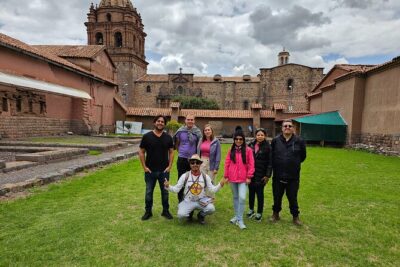
Historic Walking Tour with Pisco Sour and Local Music
Read our review →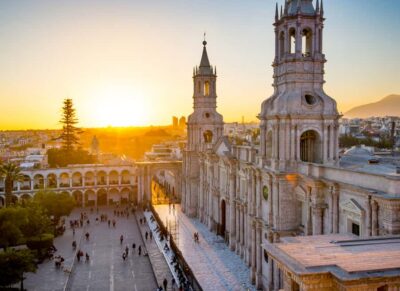
Walking tour in the Historic Center of Arequipa
Read our review →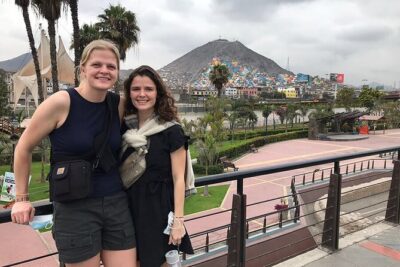
Top Attractions in Lima: Historic Center, Love Park & Catacombs
Read our review →Browse the lists this tour appears in